Sicilian Caponata
Sicilian Caponata: Sweet, Sour, and Full of Flavor
Caponata is one of Sicily’s most iconic dishes — a perfect balance of sweet, sour, and savory flavors.
Fried eggplant is combined with tomatoes, celery, olives, capers, and toasted pine nuts, then finished in a classic agrodolce sauce made with vinegar and sugar.
It’s a dish built on contrast — rich and bright at the same time — and one that only gets better as it sits.
At room temperature, Sicilian caponata only becomes better as the flavors sit and develop over time.
Serve it as an appetizer, a side dish, or simply with crusty bread.
If you enjoy Sicilian dishes like this, try my Eggplant Parmigiana or Bruschetta, two other Italian vegetable-forward classics.
Watch the Full Video
Watch how Sicilian Caponata comes together step by step.
Why This Version Works
Great Sicilian caponata is all about balance. The eggplant should stay soft without becoming soggy, while the agrodolce should brighten the dish without overpowering it.
This version keeps every ingredient distinct so the sweet, sour, salty, and rich flavors remain balanced in every bite.
Technique & Texture: Getting Caponata Right
The most important step in Sicilian caponata is frying the eggplant separately before combining everything together.
This allows the eggplant to keep its texture instead of absorbing too much liquid from the sauce. Cooking the vegetables individually also helps preserve their flavor and prevents the dish from becoming mushy.
The final agrodolce should taste balanced — noticeable, but never harsh or overpowering.
Fresh basil added just before serving helps brighten the rich sweet-and-sour flavors and brings freshness to the finished dish.
The Tradition Behind Sicilian Caponata
Caponata is deeply rooted in Sicilian cooking and reflects the island’s history of layered cultural influences.
The combination of vinegar, sugar, olives, and eggplant reflects the bold contrasts found throughout Sicilian cuisine, where sweet and sour flavors often appear together in the same dish.
Traditionally served as part of an antipasto spread, caponata remains one of Sicily’s most recognizable and beloved recipes.
How Caponata Is Traditionally Served
One of the things that makes caponata unique is that it’s rarely served piping hot straight from the stove. Like many Sicilian dishes, it’s meant to rest so the flavors can fully develop and come together.
As the caponata sits, the eggplant absorbs the agrodolce while the olives, celery, capers, and tomatoes soften into the dish. The result is a deeper, more balanced flavor the next day.
It’s commonly served as part of an antipasto spread alongside bread, seafood, cheeses, or grilled vegetables, making it one of the most versatile dishes in Sicilian cooking.
Why Sicilian Cooking Stands Out
Sicilian cooking is known for bold contrasts and layered flavor combinations that differ from many other regions of Italy.
Dishes like caponata combine sweet, sour, salty, and rich elements all at once, creating a style of cooking that feels vibrant and deeply flavorful without becoming overly complicated.
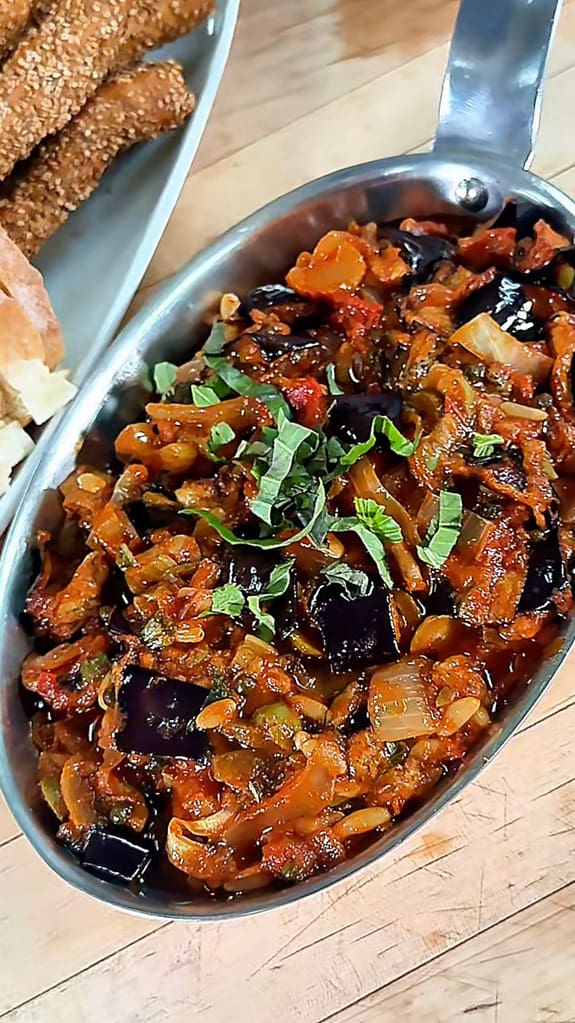
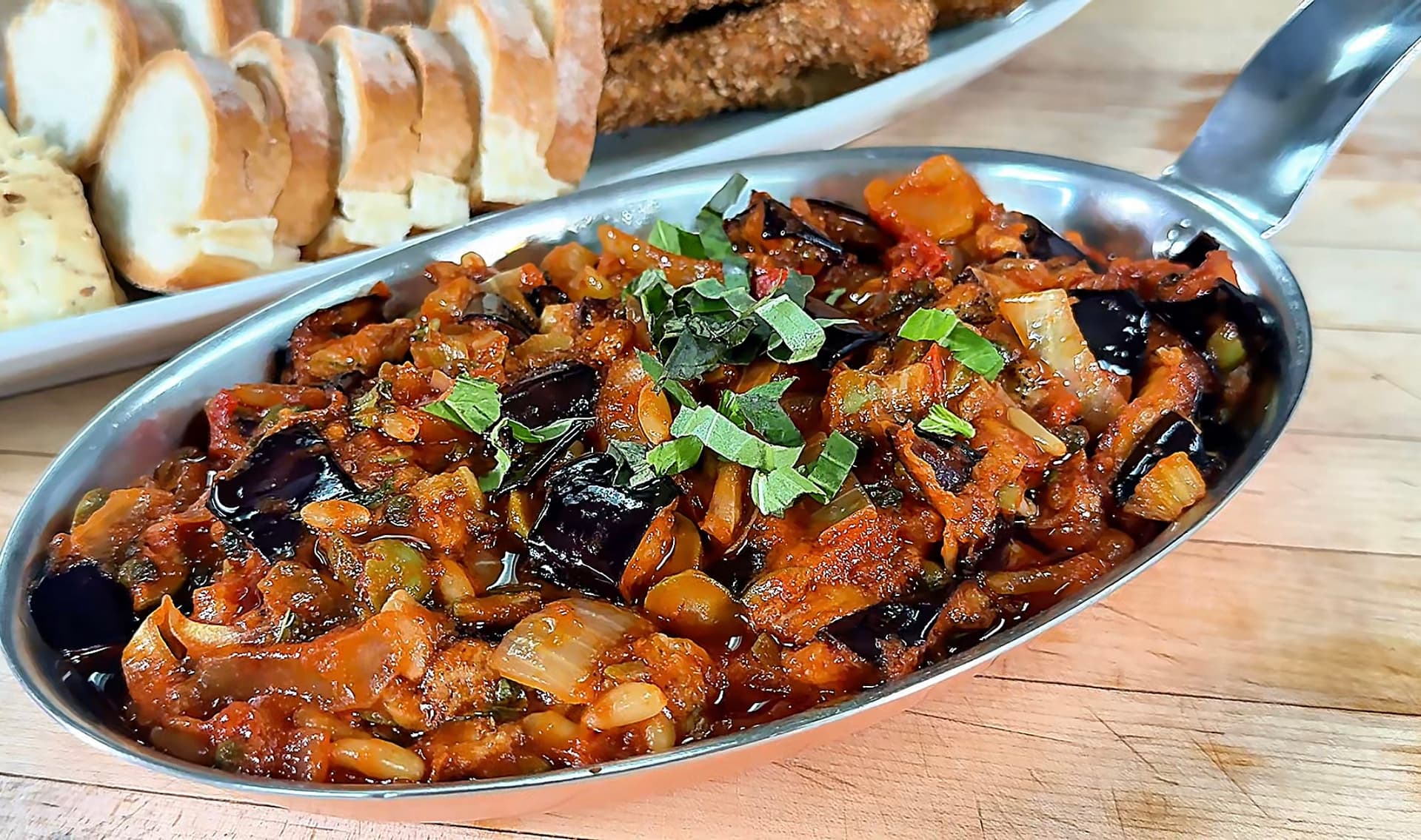

Sicilian Caponata
Ingredients
Method
- Heat neutral oil to about 350°F and fry the cubed eggplant until golden on all sides. Transfer to a paper towel–lined tray and set aside.
- In a large pan, heat olive oil and sauté the sliced onion and celery until soft and translucent, about 10–12 minutes.
- Add the chopped tomatoes and cook for 3–4 minutes until they begin to break down.
- Stir in the olives, capers, and toasted pignoli. Lower the heat and cook gently for 15–20 minutes.
- In a small bowl, combine tomato paste, sugar, and red wine vinegar.
- Add this mixture to the pan and cook for 3–4 minutes, allowing the vinegar to cook off and the flavors to deepen.
- Add the fried eggplant and toss gently to combine.
- Remove from heat and finish with fresh basil.
- Let cool to room temperature or refrigerate before serving.
- Drizzle with extra virgin olive oil before serving.
Chef’s Notes
- Frying the eggplant separately prevents it from becoming soggy.
- Caponata tastes even better after it sits — the flavors develop over time.
- Balance is key — adjust vinegar and sugar to your taste.
Caponata Questions
What is caponata?
Caponata is a traditional Sicilian dish made with eggplant and vegetables in a sweet and sour (agrodolce) sauce.
Is caponata served hot or cold?
It is typically served at room temperature or slightly chilled.
Can caponata be made ahead of time?
Yes — it actually tastes better the next day.
What do you serve with caponata?
Serve with crusty bread, crostini, or as a side dish.