
Pasta e Patate
What is Pasta e Patate?
Pasta e Patate is one of the most comforting dishes in Italian cooking — a humble Neapolitan classic made with pasta, potatoes, and a handful of pantry ingredients, cooked until rich, creamy, and deeply satisfying.
This is cucina povera at its finest: simple ingredients, slow cooking, and real technique that transforms necessity into tradition.
If you enjoy dishes like this, you’ll also love Pasta e Piselli or Pasta e Fagioli, two other classic examples of simple, comforting Italian cooking.
Watch How I Make It
Watch how this Pasta e Patate comes together step-by-step.
Why This Version Is Different
Many traditional Neapolitan versions of Pasta e Patate are made without tomatoes, resulting in a lighter, more “white” style dish.
This is the version I grew up with — slightly richer, with a touch of tomato that adds depth and color while still keeping that classic creamy texture. It’s the way we’ve always made it in my family.
Technique & Texture: Getting Pasta e Patate
The key to Pasta e Patate is texture. It should not be dry or soupy — it should be creamy and cohesive, almost like a loose risotto.
This comes from cooking the pasta directly with the potatoes and allowing the starch to naturally thicken the sauce. Stirring throughout the cooking process helps release that starch and build the right consistency.
Done properly, the pasta and potatoes should feel like they melt together into one dish.
This same technique is what gives dishes like Pasta e Piselli their signature creamy consistency.
This is also a dish that continues to evolve as it sits. Like many traditional Italian recipes, Pasta e Patate often tastes even better after resting for a few minutes, fully allowing the starch and flavors to fully come together before serving.
The Tradition Behind Pasta e Patate
Pasta e Patate is one of the most traditional dishes in Neapolitan cooking, rooted in the idea of making something meaningful from very little. It’s a dish that reflects the heart of cucina povera — using simple ingredients like pasta, potatoes, and pantry staples to create something rich and satisfying.
In many Italian homes, this dish isn’t just about the recipe — it’s about the process. Slow cooking, constant stirring, and understanding texture are what transform these ingredients into something special.
This is why Pasta e Patate remains one of the most beloved dishes in Italian home cooking.
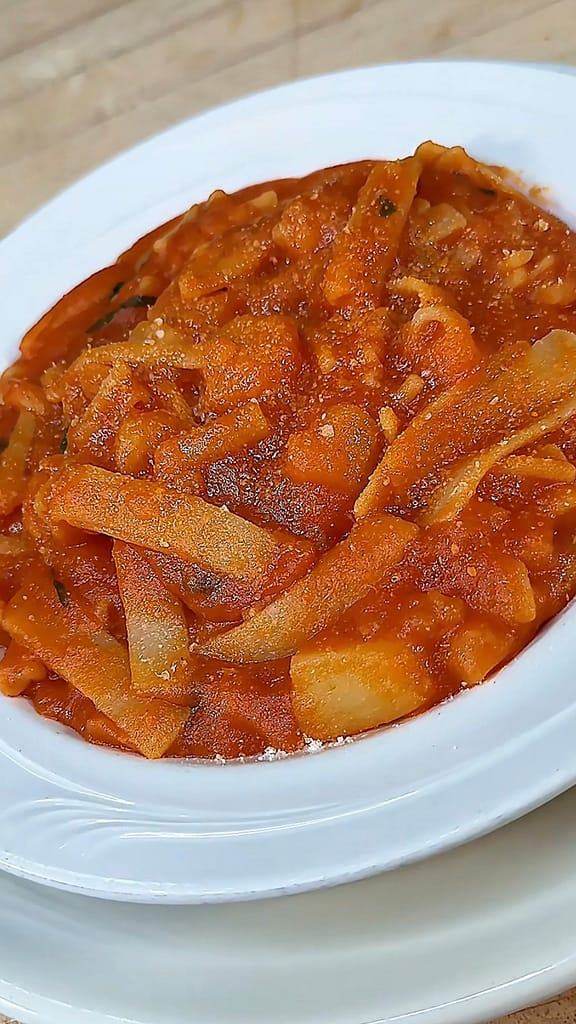
How to Make Pasta e Patate
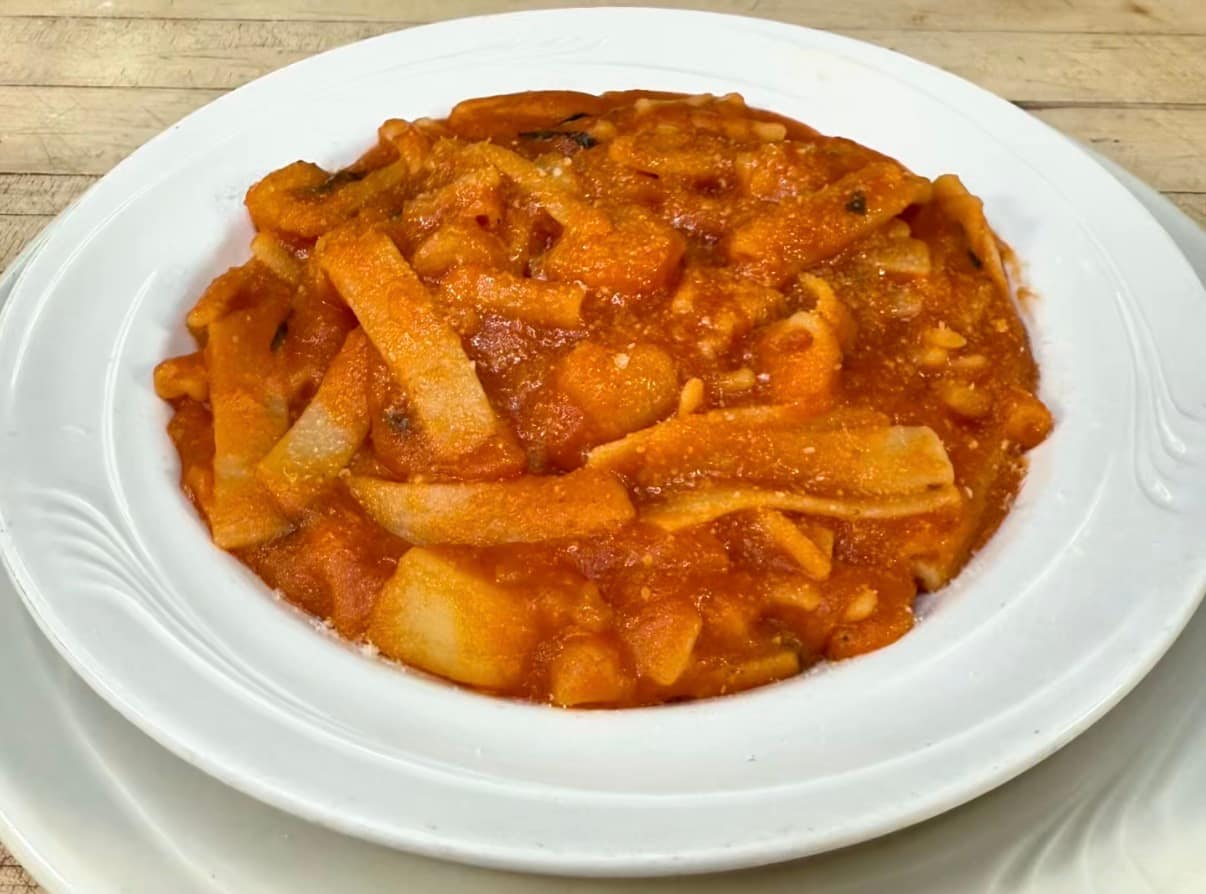

Pasta e Patate
Ingredients
Method
- Heat a drizzle of olive oil in a large pot over medium heat. Add onion, prosciutto ends, and basil. Sauté until soft and translucent.
- Add diced potatoes and cook for 2–3 minutes. Pour in passata and add 48 oz water. Season with salt and pepper.
- Bring to a boil, reduce to a gentle simmer, and cook 30–40 minutes until potatoes are tender.
- Add pasta directly into the pot. Stir occasionally and cook until al dente. The starch will naturally thicken the sauce. Add more water if needed for consistency.
- Turn off heat. Stir in Parmigiano. Serve hot with extra cheese and a drizzle of olive oil.
Chef’s Notes
- Cook the pasta directly with the potatoes to build natural creaminess
- Stir frequently to help release starch and create the texture
- Adjust liquid as needed — it should be creamy, not dry
- Finish with cheese and black pepper for balance
Pasta e Patate Questions
Can I make Pasta e Patate thicker or thinner?
Yes — add more liquid for a looser texture, or cook it longer for a thicker, creamier consistency.
What pasta works best for Pasta e Patate?
Small pasta shapes like ditalini or pasta mista work best because they cook evenly and help create a cohesive texture.
Can I make this dish vegetarian?
Absolutely — simply omit any meat and use olive oil and vegetables for flavor.
Why is my Pasta e Patate not creamy?
It likely needs more stirring or more starch development. Cooking the pasta directly in the pot and mixing frequently helps build the correct texture.
Can I reheat Pasta e Patate?
Yes, but add a splash of water or broth when reheating to loosen it back up.