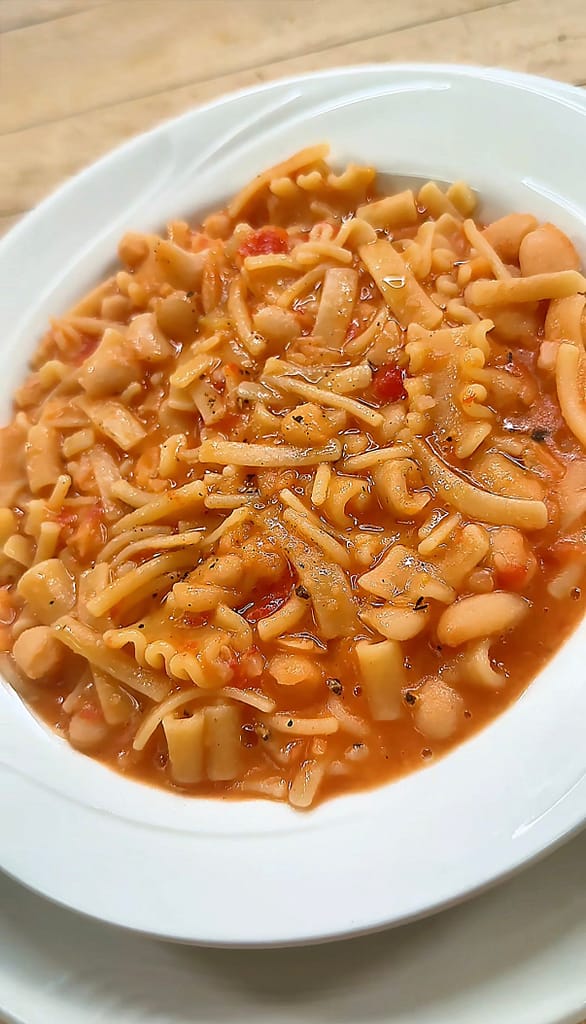
Neapolitan pasta e fagioli with pasta mista and cannellini beans
| |

Pasta e Fagioli (Traditional Neapolitan Pasta & Bean Soup)
Jump to Recipe Jump to Video Print Recipe
Neapolitan pasta e fagioli with pasta mista and cannellini beans

Pasta Fagioli: A Classic Italian Comfort Soup

Pasta Fagioli — or “pasta e fagioli” — is one of the most comforting dishes in Italian cooking.

This humble soup combines pasta, beans, and tomatoes into a rich, hearty bowl that has been a staple of Italian kitchens for generations. Like many traditional recipes, it comes from the philosophy of cucina povera — simple ingredients transformed into something deeply satisfying.

Every Italian family has their own way of making it. Some keep it brothy, others cook it until it becomes thick and hearty.

But no matter the variation, Pasta Fagioli always delivers the same thing: pure comfort in a bowl.
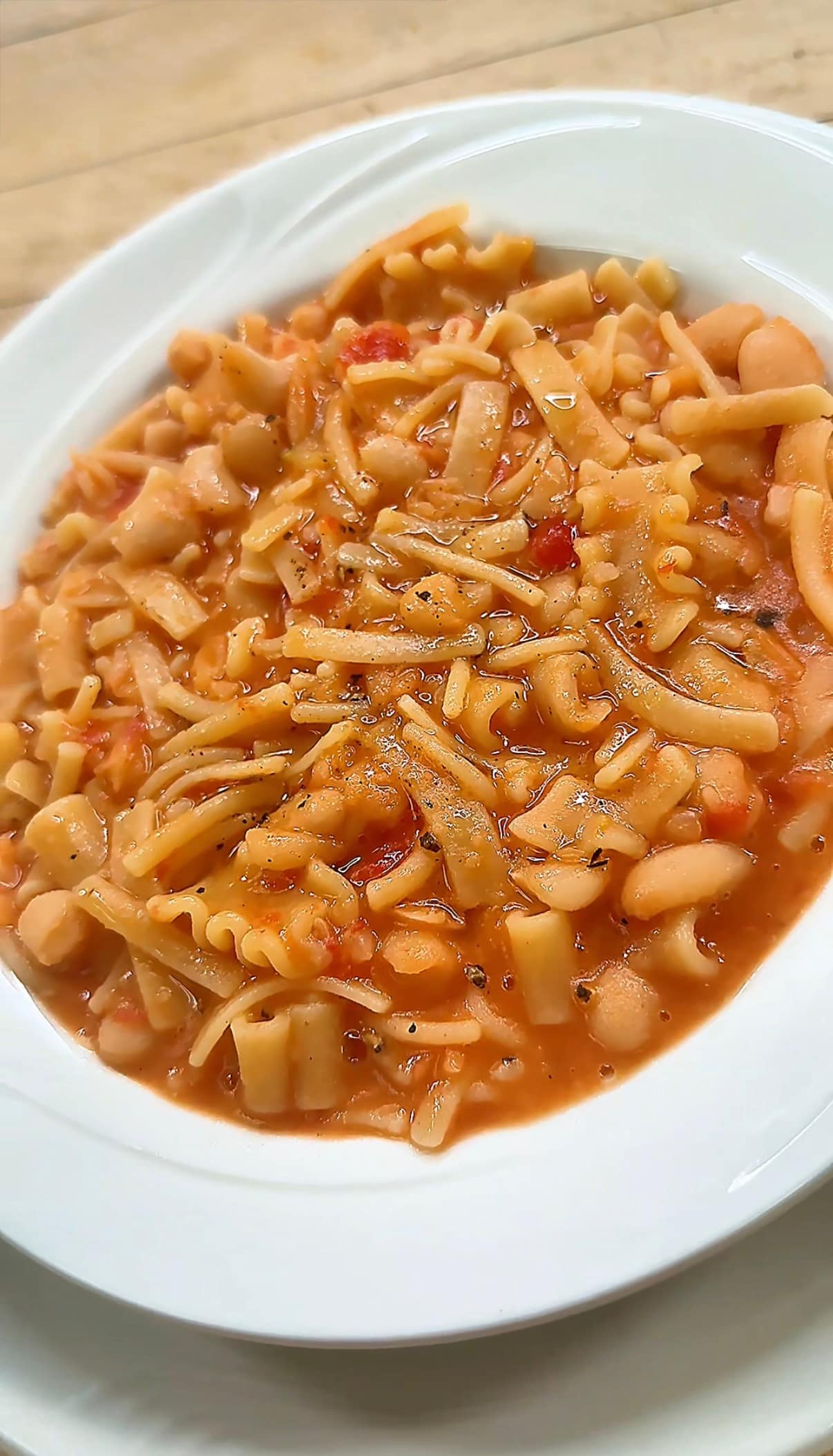
Neapolitan pasta e fagioli with pasta mista and cannellini beans
matthewcutolo

Pasta e Fagioli

This traditional Neapolitan Pasta e Fagioli is a classic Italian comfort dish made with cannellini beans, pasta mista, tomatoes, garlic, and olive oil. A simple yet deeply flavorful recipe rooted in the traditions of southern Italian cooking.
Prep Time 15 minutes
Cook Time 40 minutes
If using dried beans 2 hours 30 minutes
Total Time 55 minutes
Servings: 6 people
Course: Soup
Cuisine: Italian

Ingredients
  

  • 12 oz pasta mista
  • cups dried cannellini beans or 2 cans cooked cannellini beans, drained and rinsed
  • ½ can of tomatoes 14 oz crushed tomatoes
  • cup olive oil
  • 2 cloves garlic
  • ½ cup diced celery
  • 2 bay leaves
  • Salt and pepper q.b.

Method
 

Cooking the Dried Beans
  1. If using dried beans, rinse and soak them overnight in water.
  2. Drain the beans and add them to a pot with fresh cold water, the bay leaves, and one clove of garlic. Simmer for 2–2½ hours, until the beans are tender.
Pasta e Fagioli
  1. In a large pot, heat the olive oil over medium heat.
  2. Add one clove of garlic, whole, along with the diced celery. Sauté until the celery becomes soft and translucent, about 5 minutes.
  3. Stir in the crushed tomatoes and cook for another 5 minutes.
  4. Add the cooked beans with a slotted spoon, then pour in enough of their cooking liquid to cover everything by about one inch.
  5. If using canned beans, substitute water or broth for the bean cooking liquid.
  6. Season with salt and pepper and bring the pot to a gentle boil.
  7. Add the pasta mista directly into the pot and cook until al dente, stirring occasionally and adding more liquid if needed.
  8. Finish with a drizzle of extra virgin olive oil and cracked black pepper before serving.

Notes

Chef’s Tips 

Use pasta mista if possible. This traditional mix of small pasta shapes is commonly used in Naples.
Cooking the pasta directly in the soup allows the starch to thicken the broth and create a richer texture.
Always finish Pasta e Fagioli with a drizzle of good olive oil — it adds depth and ties the whole dish together.

Pasta e Fagioli Questions

What does Pasta e Fagioli mean?

Pasta e Fagioli translates to “pasta and beans” in Italian and refers to the simple ingredients used in the dish.

Is Pasta e Fagioli from Italy?

Yes. Pasta e Fagioli originated in Italy and is especially popular in southern regions like Campania.

What pasta is used in Pasta e Fagioli?

Traditional Neapolitan versions often use pasta mista, a mixture of small pasta shapes.

Can you use canned beans for Pasta e Fagioli?

Yes. While dried beans offer deeper flavor, canned cannellini beans work well for a quicker version.

Similar Posts

  • | |

    Pasta e Piselli (Italian Pasta with Peas)

    What is Pasta e Piselli? Pasta e Piselli is a classic Italian comfort dish rooted in cucina povera cooking. Made with pasta, peas, olive oil, pancetta and onions, it’s meant to be creamy and cohesive. The pasta is directly boiled in the pot with the peas and the starch from the pasta is what creates…

  • | |

    Pasta e Patate (Neapolitan Pasta & Potatoes)

    Pasta e Patate is one of the most comforting dishes in Italian cooking — a humble Neapolitan classic built from pasta, potatoes, and a few pantry ingredients, cooked until rich, creamy, and deeply satisfying. This is cucina povera at its finest: simple ingredients, slow cooking, and real technique that transforms necessity into tradition. How to…

  • |

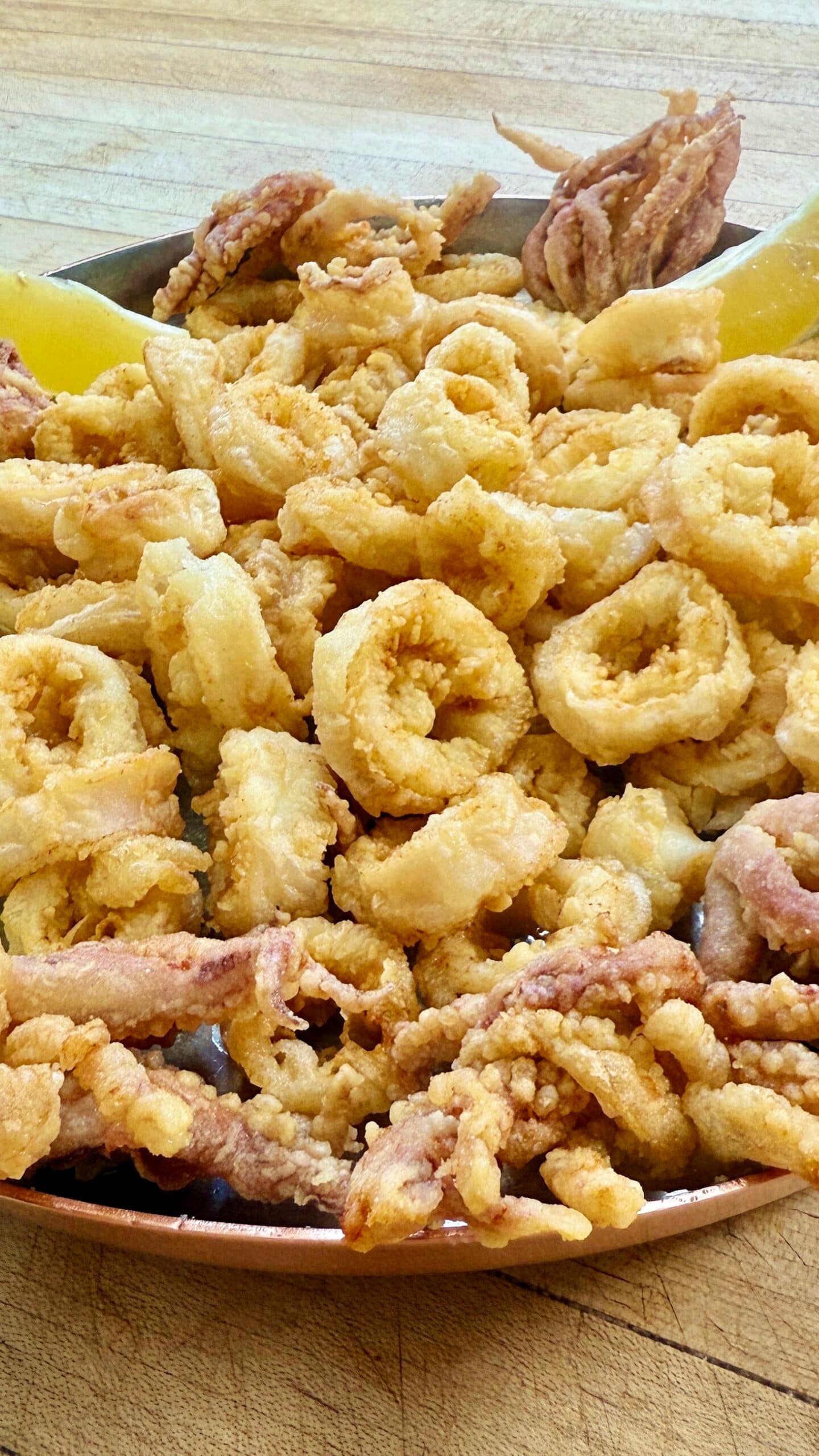
    Fried Calamari (Classic Italian-American Style)

    Fried Calamari is a classic Italian antipasto — light, crisp, and meant to be eaten the moment it hits the table. When it’s done right, calamari should be tender, not chewy, with a delicate coating that stays crisp without feeling heavy. This version sticks to the fundamentals: clean oil, proper temperature, and just enough seasoning…

  • |

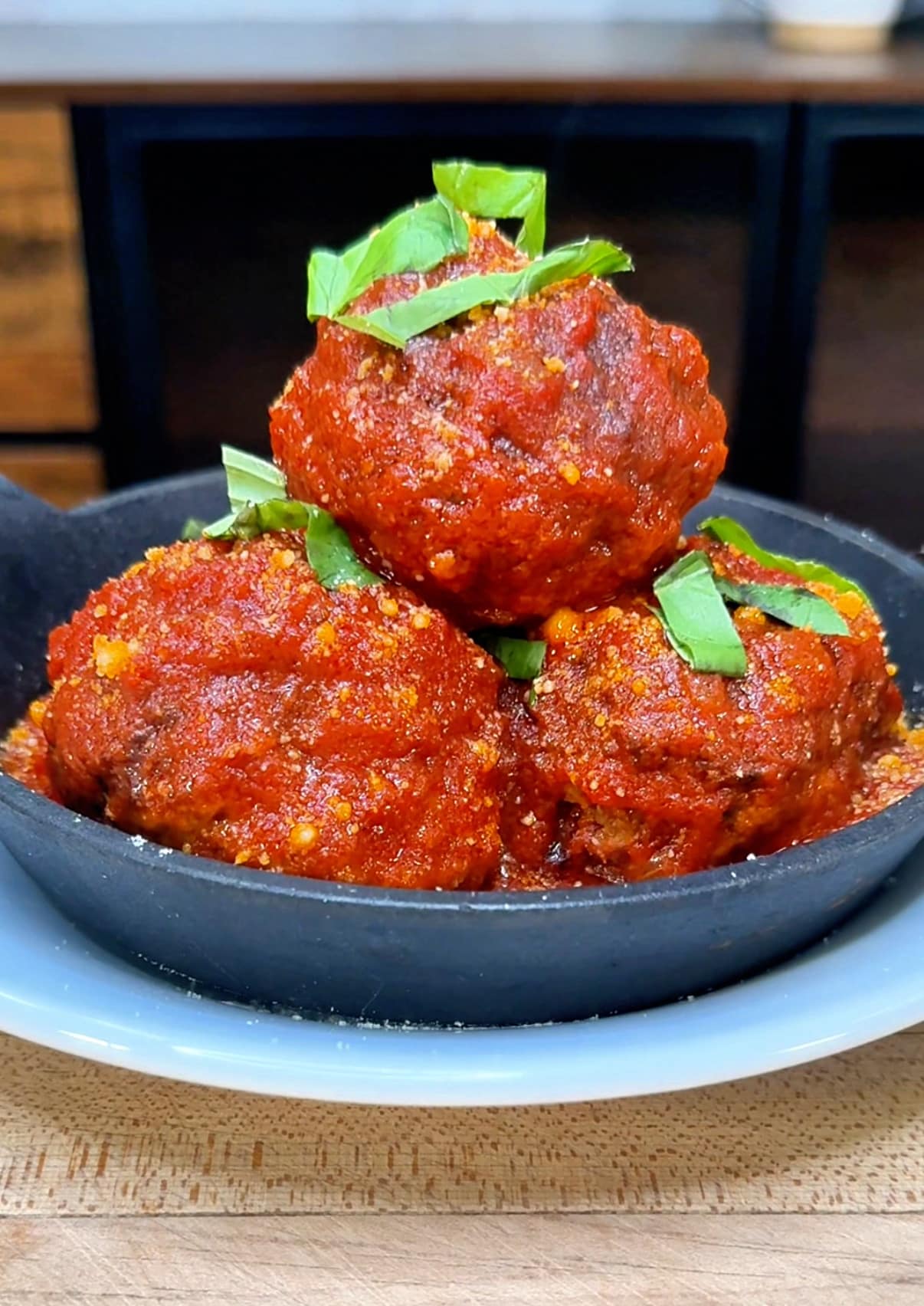
    Grandma’s Sunday Sauce Meatballs

    The classic Italian-American meatballs my grandmother always fried before simmering in Sunday sauce. My Grandmother’s Sunday MeatballsThere’s one step most people skip when making meatballs — and it changes everything. My grandmother always fried her meatballs first before they ever touched the sauce. That golden crust locks in the juices, builds incredible flavor, and helps…

  • | |

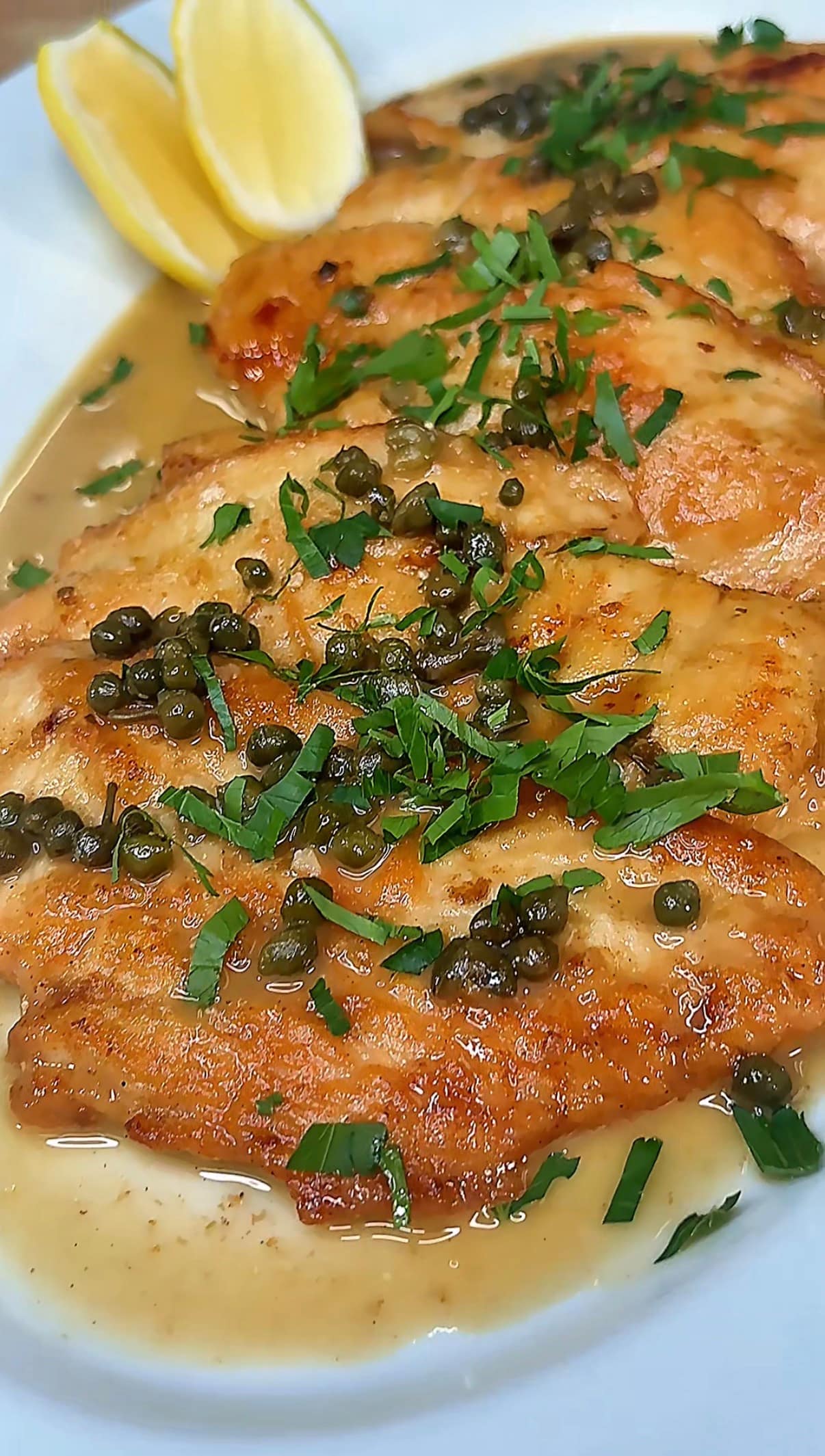
    Chicken Piccata (Easy Italian-American Classic)

    Chicken Piccata: A Classic Italian-American Favorite Chicken Piccata might be one of the most perfect Italian-American dishes ever created. It’s simple, elegant, and packed with flavor — thin chicken cutlets lightly dredged in flour, seared until golden, and finished in a bright lemon, white wine, and caper sauce. It’s the kind of dish that feels…

  • |

    Stuffed Shells with Spinach & Ricotta

    Stuffed Shells: A Classic Italian-American Comfort Dish Are stuffed shells one of the most underrated Italian-American classics? It’s the kind of dish that feels like something you’d find on a Sunday dinner table, but it’s easy enough to make on a weeknight at home. Jumbo pasta shells are filled with a creamy ricotta and spinach…

Leave a Reply

Your email address will not be published. Required fields are marked *

Recipe Rating