
Pasta e Piselli (Italian Pasta with Peas)
What is Pasta e Piselli?
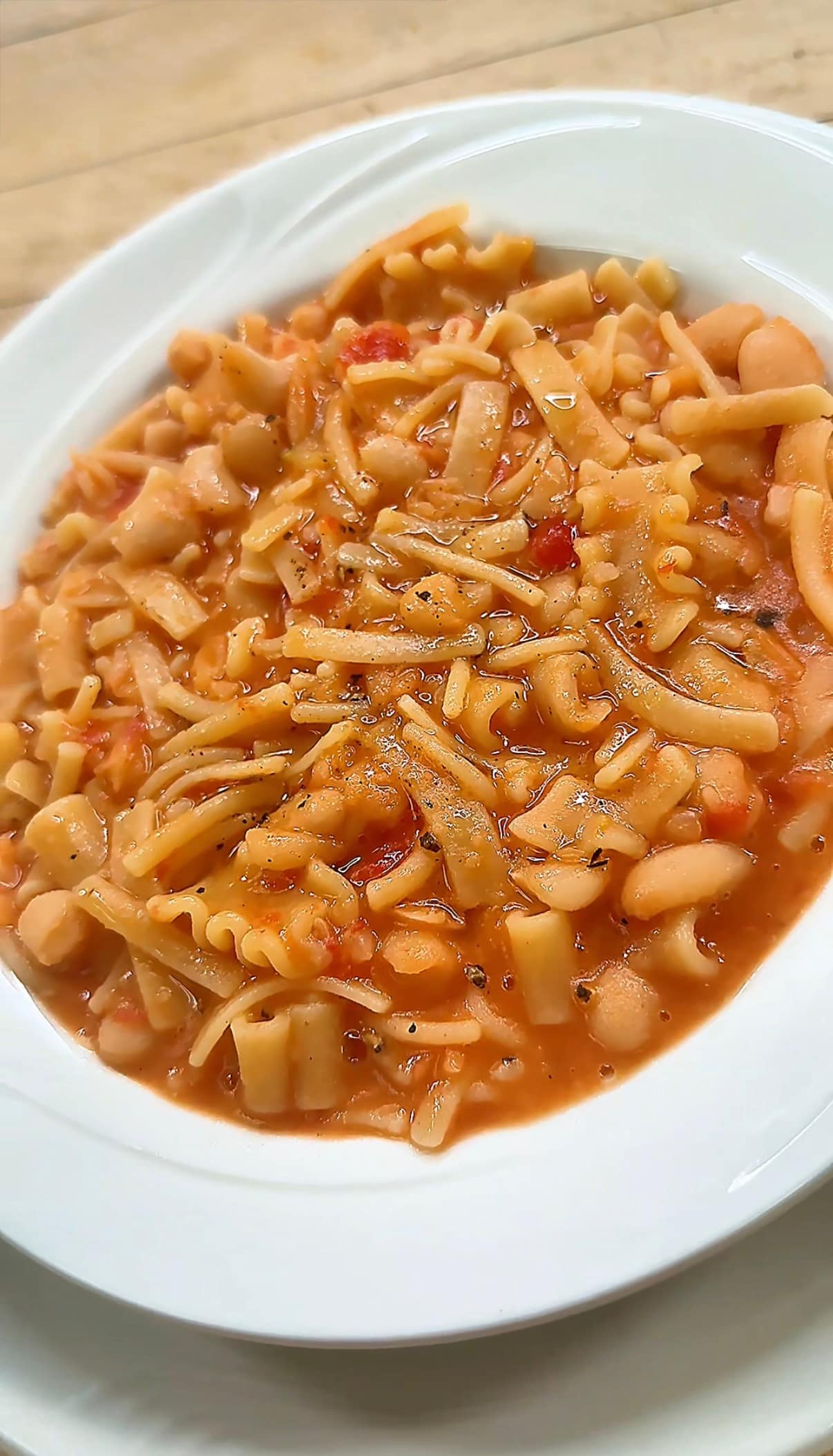
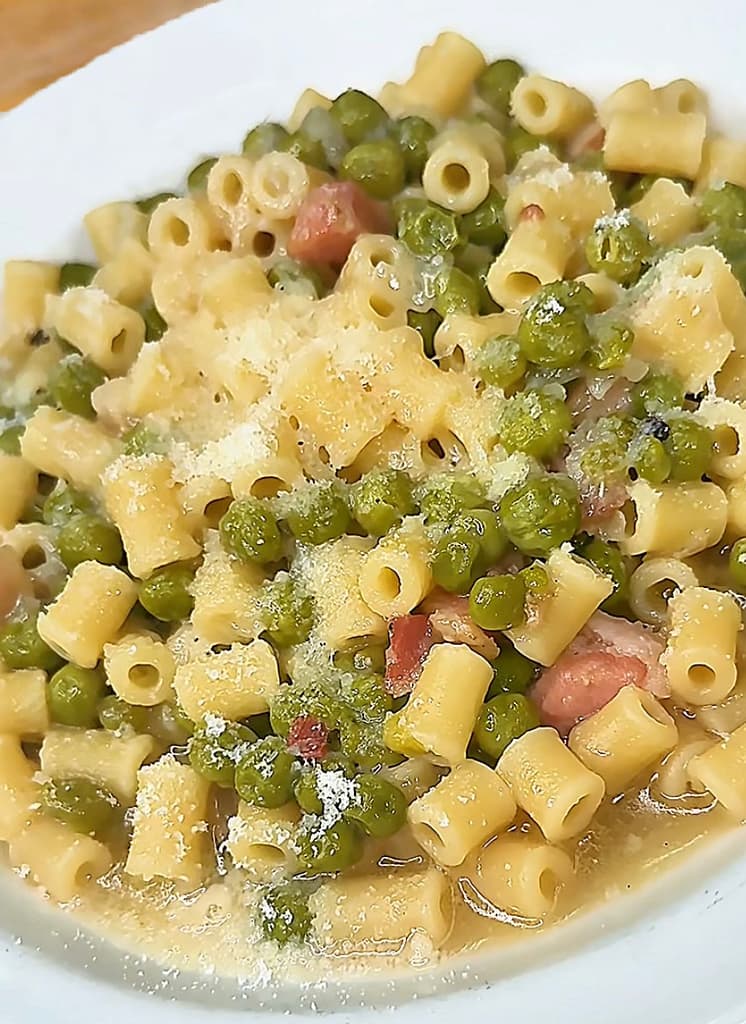
Pasta e Piselli is a classic Italian comfort dish rooted in cucina povera cooking. Made with pasta, peas, olive oil, pancetta and onions, it’s meant to be creamy and cohesive. The pasta is directly boiled in the pot with the peas and the starch from the pasta is what creates the sauce, a technique Italian families have relied on for generations.
This version is how it’s traditionally made and meant to be cooked. Creamy, cohesive and absolutely delicious.
Watch How I Make It
Here’s how I make Pasta e Piselli in real time, focusing on texture and proper starch development.
Why This Version Is Different
- When you cook the pasta directly in the sauce, the pasta releases its starch helping facilitate that creamy texture. By adding the grated parmigiano and emulsifying it with the remaining liquid you create the perfect consistency.
- Common beginner mistakes you see (e.g., adding too much water)
- When to use fresh vs frozen peas
Technique & Texture: Getting Pasta e Piselli Right
Why It Should Be Creamy: One of the most common mistakes beginners make with Pasta e Piselli is adding too much water. This dish is not meant to be brothy. The starch released from the pasta and peas is what creates the creamy texture. If you flood the pot with liquid, you dilute that starch and the sauce never comes together.
The Biggest Mistakes: Another mistake is cooking the pasta separately and combining it at the end. Traditional Pasta e Piselli finishes cooking directly in the pan with the peas. That’s what allows the starch to emulsify with the olive oil and create the proper consistency.
Finally, rushing the final few minutes is where most people go wrong. The texture transforms quickly — patience is what turns it from pasta with peas into a cohesive, creamy dish.
How to Make Pasta e Piselli

Pasta e Piselli
Ingredients
Method
- Dice onion and pancetta. In a pot, heat olive oil and sauté until golden, 5–7 minutes.
- Add peas, stir, and cook 2–3 minutes.
- Cover with water (about 1 inch above mixture), season with salt and pepper, bring to a boil.
- Add pasta directly into the pot and cook until al dente, stirring often.
- Adjust water if you want it more brothy or more dry.
- Fold in Parmigiano, adjust seasoning, and serve.
Chef’s Notes
This dish is forgiving, but it rewards attention. Let the peas soften without losing their color, cook the pasta in the sauce, and don’t rush the final emulsification. That’s where the character comes from. This technique is similar to how I cook Pasta e Patate and other classic dishes.
I’ve cooked this dish countless times in both home and professional kitchens, and the difference always comes down to patience and restraint with the liquid.
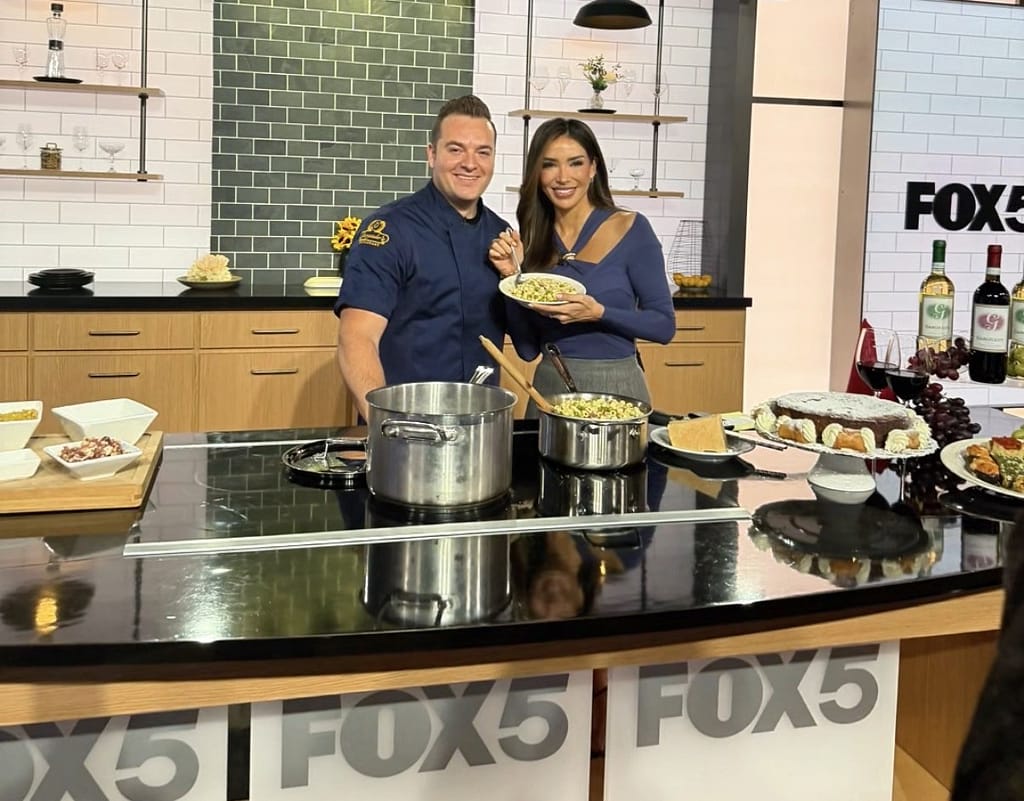
I’ve also demonstrated this dish on television, including a FOX 5 appearance where I discussed traditional Italian comfort food and proper technique.
This is one of those dishes that sits at the heart of cucina povera — simple ingredients, cooked with intention.
FAQ
Can I use frozen peas for pasta e piselli?
- Fresh I or frozen peas both work! Fresh peas are wonderful when they’re in season but I always have a bag of frozen peas in the freezer. They are consistent and work great here.
Is pasta e piselli supposed to be thick?
- While every family might have their own variation, I love when it has that creamy consistency from cooking the pasta in the sauce and emulsifying it with grated parmigiano.
What pasta shape is best for pasta e piselli?
- A small pasta like ditalini or tubettini work really well in this dish.
What if I can’t find pancetta?
- If you can’t get your hands on pancetta, bacon works well too.
Can I make this vegetarian?
- Absolutely, just leave out the pancetta and enjoy your Pasta e Piselli.