
Homemade Gnocchi
Homemade Gnocchi: The Foundation of Italian Cooking
Making gnocchi from scratch is one of the most rewarding things you can do in the kitchen.
With just potatoes, flour, and a few simple ingredients, you can create soft, delicate dumplings that are completely different from anything store-bought.
The key is technique — working the dough gently, using the right potatoes, and shaping each piece so it holds sauce perfectly.
Once you learn how to make gnocchi, it becomes a foundation for countless Italian dishes.
Take it a step further and make Gnocchi alla Sorrentina. If you enjoy making pasta from scratch, try my Orecchiette with Sausage & Broccoli Rabe or Cacio e Pepe.
Watch How I Make It
Watch how I make homemade gnocchi from scratch step-by-step.
Why This Version Works
Great homemade gnocchi should be soft and light, not heavy or gummy.
This version focuses on minimizing moisture in the potatoes and working the dough as little as possible to create the delicate texture that defines proper gnocchi.
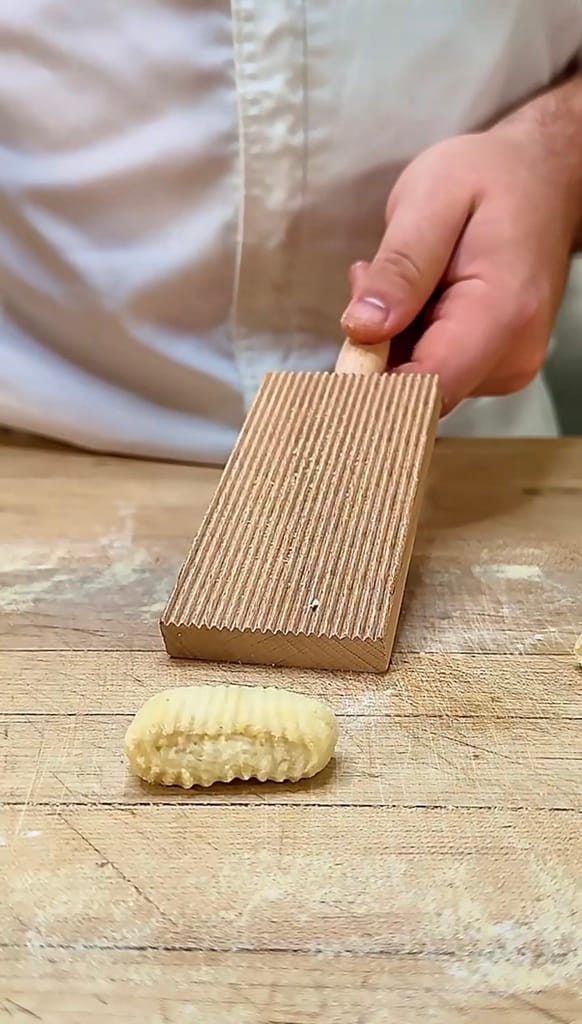
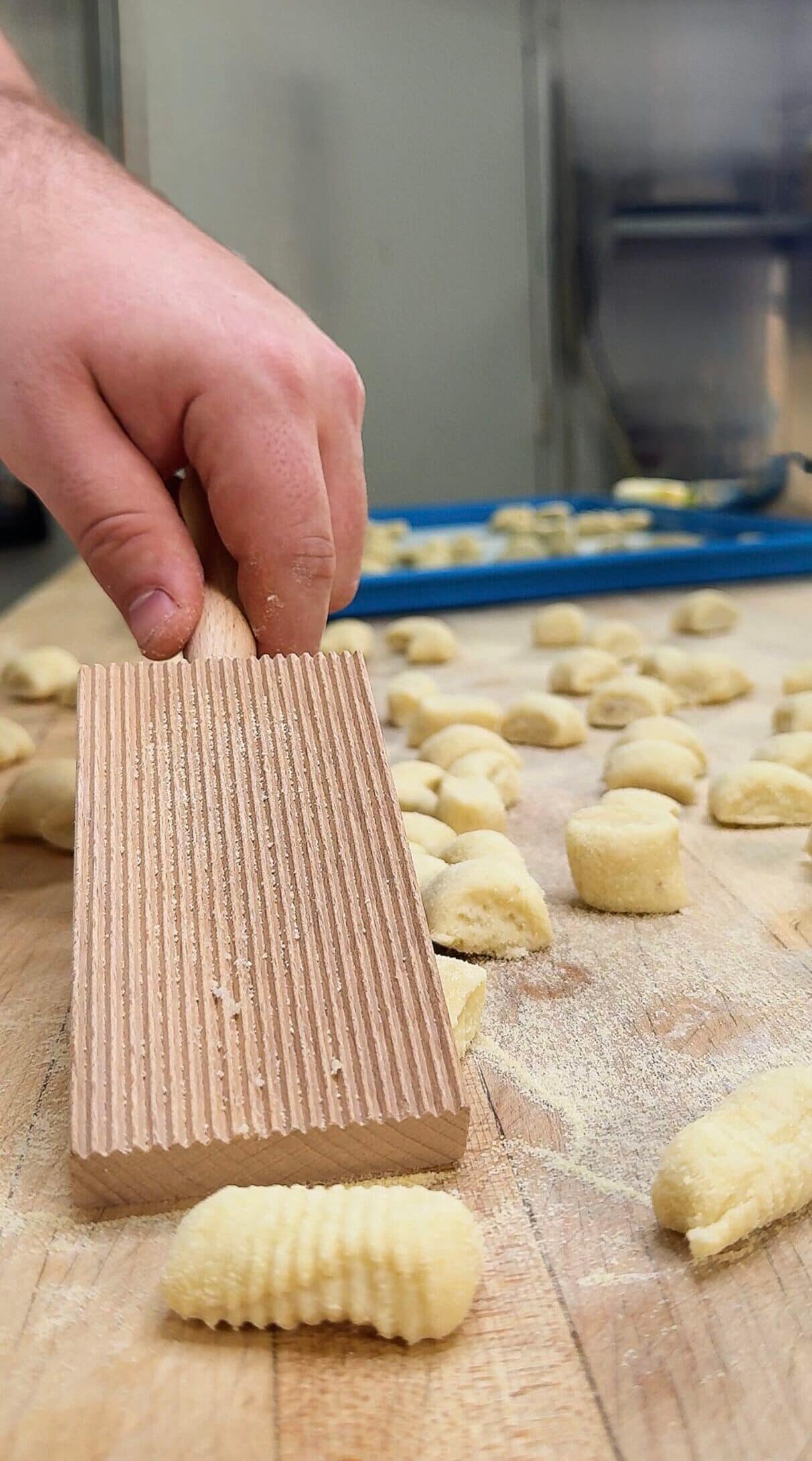
Shaping the gnocchi with ridges also helps sauce cling better to every piece.
Technique & Texture: Getting Gnocchi Right
The most important part of making homemade gnocchi is controlling moisture and handling the dough gently.
Russet potatoes work best because they contain less water, allowing the dough to stay light without needing excess flour. Overworking the dough develops too much structure and creates dense gnocchi instead of soft, pillowy dumplings.
Cooking the gnocchi briefly until they float keeps the texture delicate.
The Tradition Behind Homemade Gnocchi
Gnocchi have been part of Italian cooking for generations and exist in many forms throughout different regions of Italy.
Potato gnocchi became especially popular because they transformed inexpensive ingredients into something comforting and filling while still feeling refined when paired with the right sauce.
Today, homemade gnocchi remains one of the clearest examples of how Italian cooking relies on technique and simplicity over complexity.
Why Handmade Pasta Matters
Making pasta from scratch changes both texture and flavor.
Fresh gnocchi absorbs sauce differently than dried pasta and creates a softer, more delicate bite that’s difficult to replicate with store bought versions.
That’s why handmade pasta remains such an important part of traditional Italian cooking.
One of the best things about homemade gnocchi is how versatile it is. It can be paired with simple tomato sauce, pesto, brown butter and sage, or richer meat sauces depending on the season and occasion.
The soft texture of the gnocchi allows it to absorb flavor beautifully while still remaining light and delicate.

Homemade Gnocchi
Ingredients
Method
- Place whole, unpeeled potatoes in a pot of water and bring to a boil. Cook until fork tender, about 25–30 minutes, then drain.
- Spread the flour onto a clean work surface.
- While the potatoes are still warm, pass them through a potato ricer directly over the flour.
- Drizzle the lightly beaten egg over the potatoes and add a pinch of salt.
- Gently combine everything until a soft, smooth dough forms. Be careful not to overwork the dough — it should be pliable but not sticky.
- Divide the dough into portions.
- Roll each piece into a rope about ¾ inch thick, then cut into pieces about ¾–1 inch long.
- Using your thumb, roll each piece over a rigagnocchi board or the back of a fork to create ridges.
- Lightly sprinkle with semolina flour and arrange in a single layer on a tray until ready to cook.
Chef’s Notes
- Use russet potatoes — they have less moisture and produce lighter gnocchi.
- Work the dough gently. Overworking it will make the gnocchi dense.
- Ricing the potatoes while warm ensures a smooth texture.
- The ridges help sauce cling to the gnocchi.
How to Cook Gnocchi
Bring a large pot of salted water to a boil.
Add the gnocchi and cook until they float to the surface, about 1–2 minutes.
Remove with a slotted spoon and transfer directly into your sauce.
Gnocchi Questions
Why are my gnocchi dense?
Overworking the dough or adding too much flour can make gnocchi dense instead of light and pillowy.
Do you need egg in gnocchi?
Some traditional recipes omit egg, but it helps bind the dough and makes it easier to work with.
What potatoes are best for gnocchi?
Russet potatoes are best because they are starchy and low in moisture.
How do you cook gnocchi?
Gnocchi are cooked in boiling water and are ready when they float to the surface.