
Cacio e Pepe
Cacio e Pepe: The Classic Roman Pasta
Cacio e Pepe is one of the most iconic dishes in Roman cooking.
Made with just Pecorino Romano, black pepper, and pasta water, this pasta proves that the best Italian recipes often rely on the simplest ingredients and proper technique.
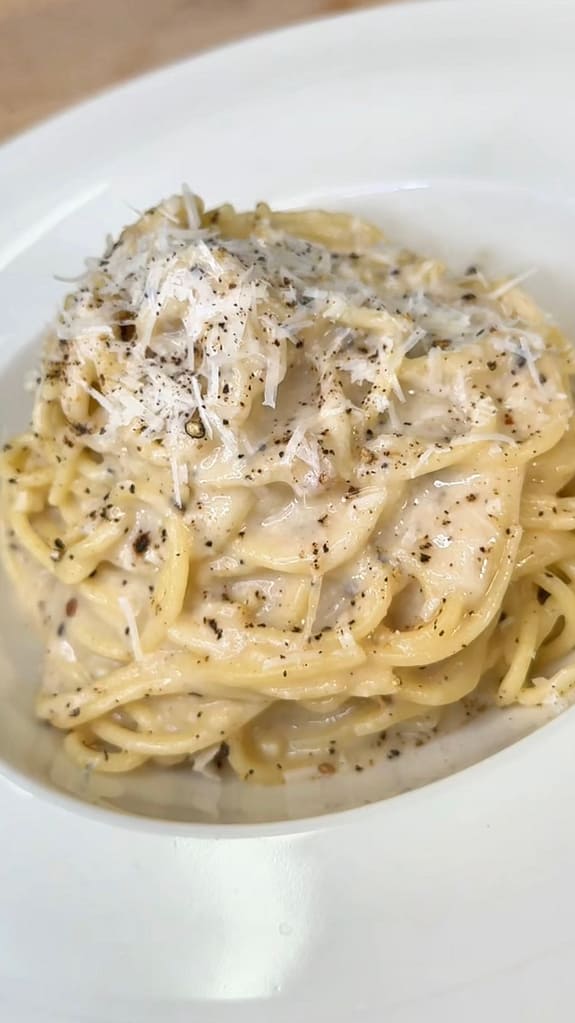
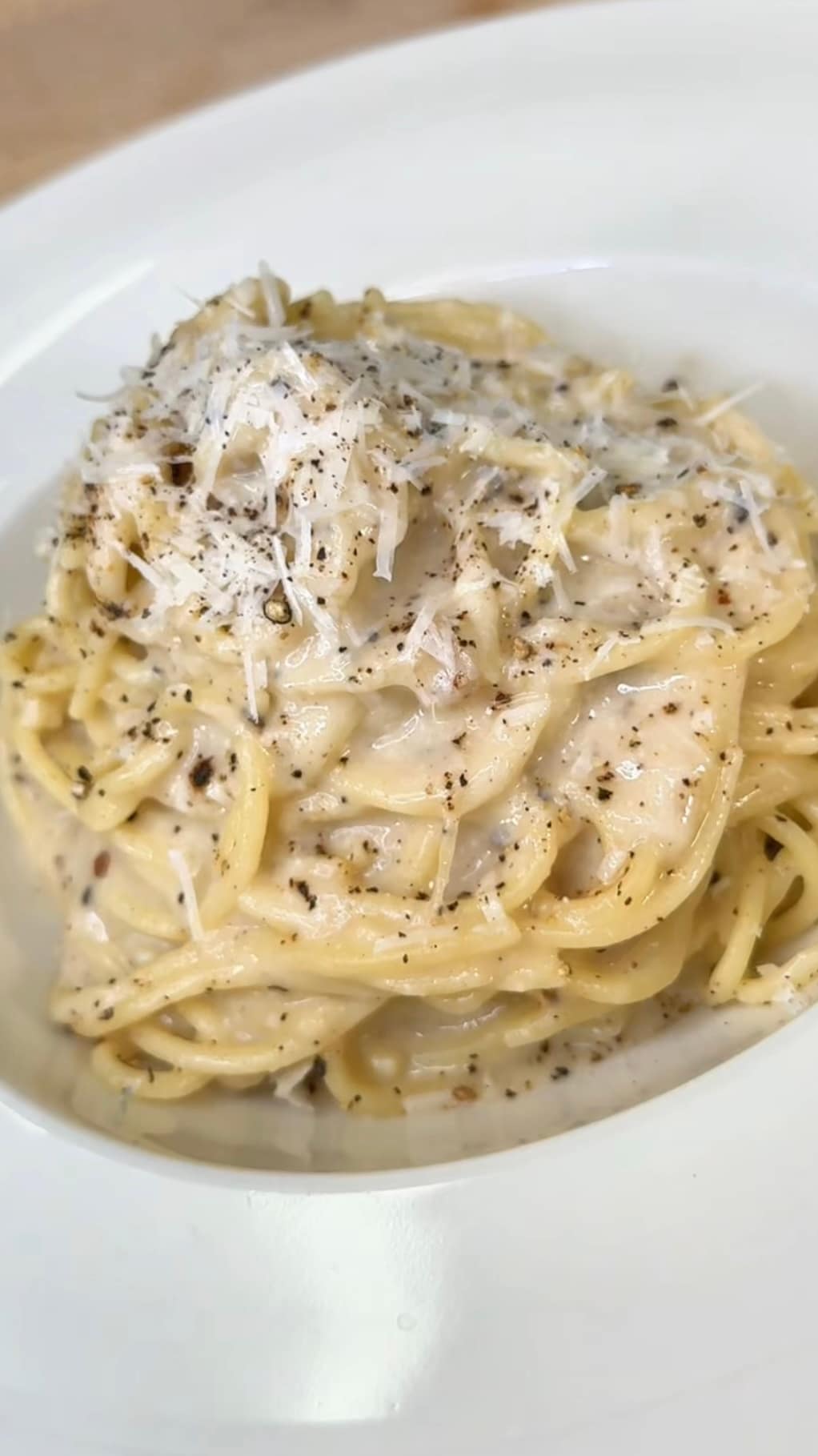
The key to perfect Cacio e Pepe is creating a silky emulsion between the cheese and the pasta water. When done correctly, the sauce becomes creamy and glossy without using butter or cream.
It’s simple, elegant, and one of the greatest pasta dishes ever created.
If you love simple pasta dishes like this, try my Carbonara recipe or Spaghetti Aglio e Oilio.
Watch How I Make It
Watch how this Cacio e Pepe comes together step-by-step.
Why This Version Works
Cacio e Pepe is all about control. The balance between heat, cheese, and pasta water determines whether the sauce comes together or breaks.
This version focuses on creating a stable emulsion by carefully managing temperature and gradually incorporating the cheese.
Technique & Texture: Getting Cacio e Pepe Right
The most important part of Cacio e Pepe is temperature control. If the pan is too hot, the cheese will clump instead of melting smoothly.
Using starchy pasta water helps bind the sauce together, creating that signature creamy texture without adding anything extra.
Tossing the pasta continuously while adding the cheese ensures the sauce coats evenly.
The Tradition Behind Cacio e Pepe
Cacio e Pepe comes from Rome and is rooted in cucina povera — simple cooking built on a few essential ingredients.
Shepherds in the region relied on dried pasta, aged Pecorino, and black pepper because they were easy to carry and lasted over time.
Today, it remains one of the purest expressions of Italian cooking — minimal ingredients, maximum technique.
The Roman Pasta Classics
Cacio e Pepe is part of what’s often called the “Roman four” — a group of classic pasta dishes that define Roman cooking.
Alongside Cacio e Pepe are alla Gricia, Amatriciana, and Carbonara. Each one builds on the same foundation of simple ingredients, evolving with small additions that completely change the dish.
Gricia adds guanciale to the base of cheese and pepper. Amatriciana builds further with tomato, while Carbonara introduces eggs for a richer, creamier texture.
Understanding these four dishes highlights how Italian cooking works — a few ingredients, used differently, can create entirely new recipes.
The Simplicity of Roman Cooking
Cacio e Pepe is a perfect example of Roman cooking philosophy — using a few ingredients and mastering the technique behind them.
There’s no room for shortcuts in this dish. Every step matters, from how the pasta is cooked to how the cheese is incorporated.

Cacio e Pepe
Ingredients
Method
- Bring a large pot of salted water to a boil and cook the spaghetti until just shy of al dente.
- Meanwhile, crush the black peppercorns and toast them in a dry pan over medium heat for about 1 minute, until fragrant.
- Add a ladle of pasta water to the pan with the pepper and allow it to simmer briefly.
- When the pasta is ready, transfer it directly to the pan with the pepper and pasta water.
- In a separate bowl, combine the finely grated Pecorino Romano with a small amount of warm pasta water to form a thick paste.
- Remove the pan from the heat.
- Slowly add the Pecorino mixture to the pasta while tossing vigorously so the cheese emulsifies with the pasta water to create a creamy sauce.
- Add more pasta water if needed to achieve the desired silky consistency.
- Serve immediately with extra Pecorino Romano and freshly cracked black pepper.
Chef’s Notes
- Use finely grated Pecorino Romano so it melts smoothly into the sauce.
- Remove the pan from heat before adding the cheese to prevent it from clumping.
- The starch in pasta water is essential for creating the creamy emulsion.
- Freshly crushed black pepper provides the best flavor.
Cacio e Pepe Questions
What does Cacio e Pepe mean?
Cacio e Pepe translates to “cheese and pepper” in Italian.
Why does Cacio e Pepe sometimes become clumpy?
The cheese can clump if the pan is too hot when the Pecorino is added. Removing the pan from heat helps create a smooth emulsion.
What cheese is used in Cacio e Pepe?
Traditional Cacio e Pepe uses Pecorino Romano, a sharp sheep’s milk cheese.
What pasta is best for Cacio e Pepe?
Spaghetti is the most traditional choice, though tonnarelli is commonly used in Rome.