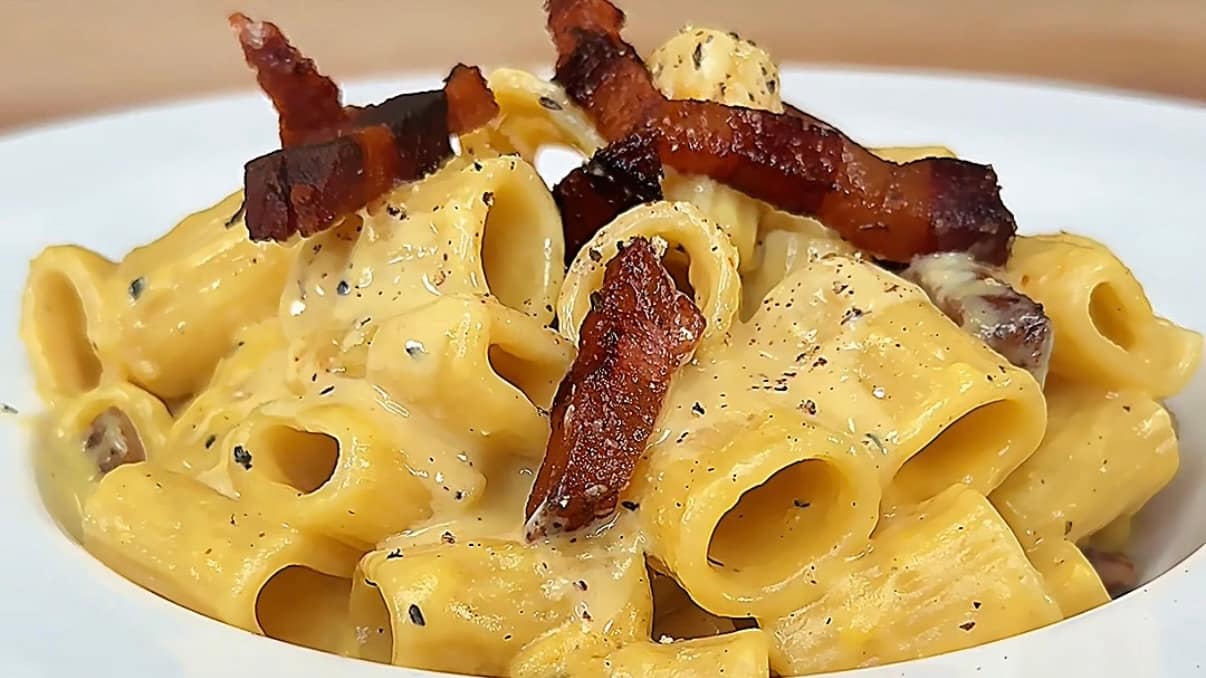
Mezzi Rigatoni alla Carbonara
Carbonara: The True Roman Classic
Carbonara is one of the most iconic pasta dishes in Italian cooking.
Made with just guanciale, egg yolks, Pecorino Romano, black pepper, and pasta water, it’s a perfect example of how simple ingredients and proper technique come together to create something incredible.
There’s no cream, no shortcuts — just a silky, emulsified sauce built from the starch of the pasta water and the richness of the eggs and cheese.
When done right, Carbonara is creamy, glossy, and packed with flavor in every bite.
If you enjoy Roman pasta dishes like this, try my Cacio e Pepe or Spaghetti Aglio e Olio.
Watch How I Make It
Watch how this carbonara comes together step-by-step.
Why This Version Works
Carbonara is all about balance and temperature control. The eggs should create a smooth sauce without scrambling, while the Pecorino and pasta water emulsify into a creamy texture.
This version focuses on proper timing and using the rendered guanciale fat to build flavor naturally.
It’s simplicity at its absolute best.
Technique & Texture: Getting Carbonara Right
The key to carbonara is controlling the heat. The eggs should never directly cook in the pan like scrambled eggs.
Instead, the residual heat from the pasta and pan gently thickens the sauce while the pasta water helps emulsify everything together.
The result should be creamy and glossy — never dry or clumpy.
The Tradition Behind Carbonara
Carbonara is one of the defining dishes of Roman cooking and part of the famous Roman pasta tradition alongside Cacio e Pepe, Gricia, and Amatriciana.
While there are many stories about its origin, the dish became famous for its simplicity and bold flavor, relying on pantry staples and cured pork to create something deeply satisfying.
Today, it remains one of the most recognized examples of Roman cuisine around the world.
The Roman Pasta Classics
Carbonara is part of what’s often called the “Roman four” — the foundational pasta dishes of Roman cuisine.
Alongside Carbonara are Cacio e Pepe, Gricia, and Amatriciana, each built from a similar base of cheese, pork, pepper, and pasta.
Small changes in ingredients create entirely different dishes, which is one of the defining characteristics of Italian cooking.
Why Carbonara Became So Popular
Carbonara became popular because it transforms a few ingredients into something rich and luxurious through technique alone.
What makes carbonara stand out is how much flavor and texture can come from just a handful of ingredients when every step is executed properly.
It’s one of those dishes that looks simple on paper, but every step matters.
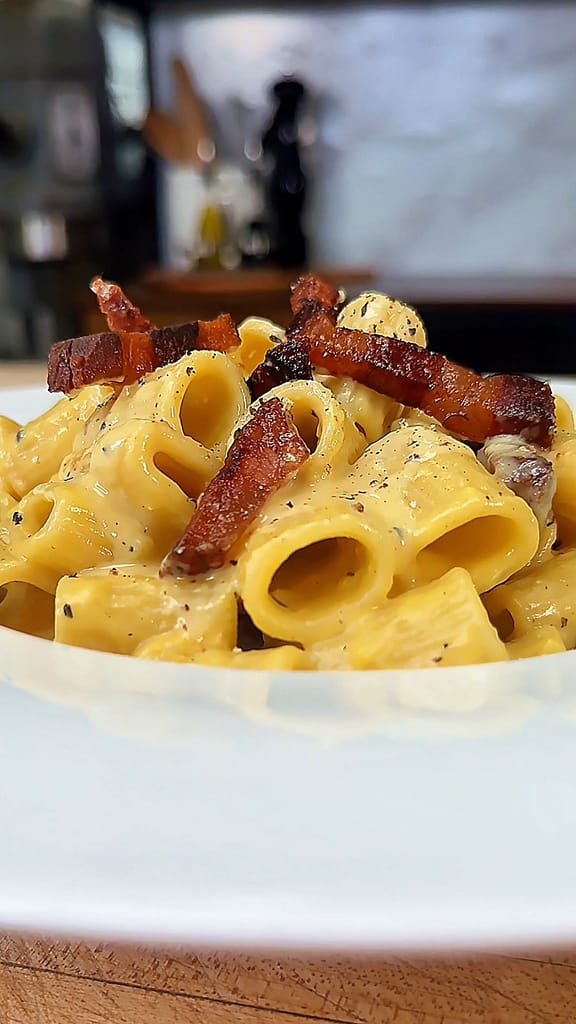
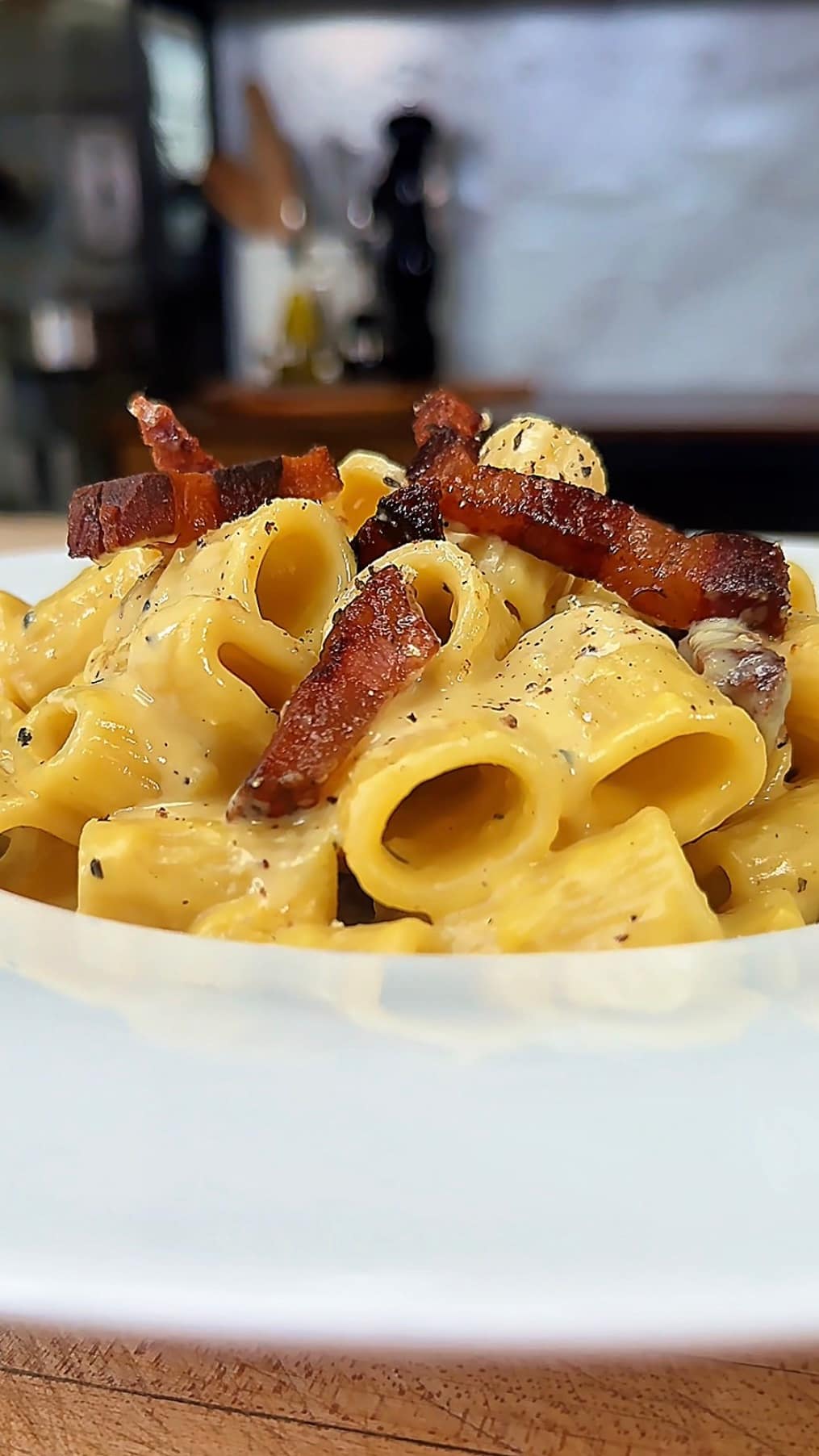

Pasta Carbonara
Ingredients
Method
- Add the guanciale to a cold pan and place over medium-low heat. Let it render slowly until golden and crispy, about 5–7 minutes.
- Remove the guanciale with a slotted spoon and set aside.
- Reserve the rendered fat — set aside about half for the egg mixture and leave the rest in the pan.
- Bring a large pot of salted water to a boil and cook the mezzi rigatoni until just shy of al dente. Reserve at least 1 cup of pasta water before draining.
- In a bowl, whisk together the egg yolks, Pecorino Romano, black pepper, and the reserved guanciale fat. Mix until smooth and creamy — thick but pourable.
- Add the drained pasta to the pan with the remaining guanciale fat over low heat. Add a splash of pasta water and toss for about 30 seconds.
- Turn off the heat.
- Add the egg mixture along with a splash of pasta water and about ⅔ of the crispy guanciale. Stir constantly until a silky, emulsified sauce forms.
- Adjust the consistency with more pasta water as needed.
- Plate the pasta and finish with the remaining guanciale, extra Pecorino Romano, and freshly cracked black pepper.
Chef’s Notes
Start the guanciale in a cold pan so it renders slowly and evenly.
Always remove the pan from heat before adding the egg mixture to prevent scrambling.
Use pasta water to control the texture and create a smooth emulsion.
Freshly grated Pecorino Romano is essential for proper melting and flavor.
Carbonara Questions
What is authentic carbonara made with?
Traditional carbonara is made with guanciale, egg yolks, Pecorino Romano, black pepper, and pasta — no cream.
Why does carbonara sometimes scramble?
The eggs can scramble if the pan is too hot when they’re added. Removing the pan from heat prevents this.
Can you use bacon instead of guanciale?
You can, but guanciale is traditional and has a richer flavor and better texture. Pancetta would be a better alternative if available.
What pasta is best for carbonara?
Spaghetti is traditional, but mezzi rigatoni or rigatoni work well because they hold the sauce.