Spaghetti Aglio e Olio
Spaghetti Aglio e Olio: The Ultimate Midnight Pasta
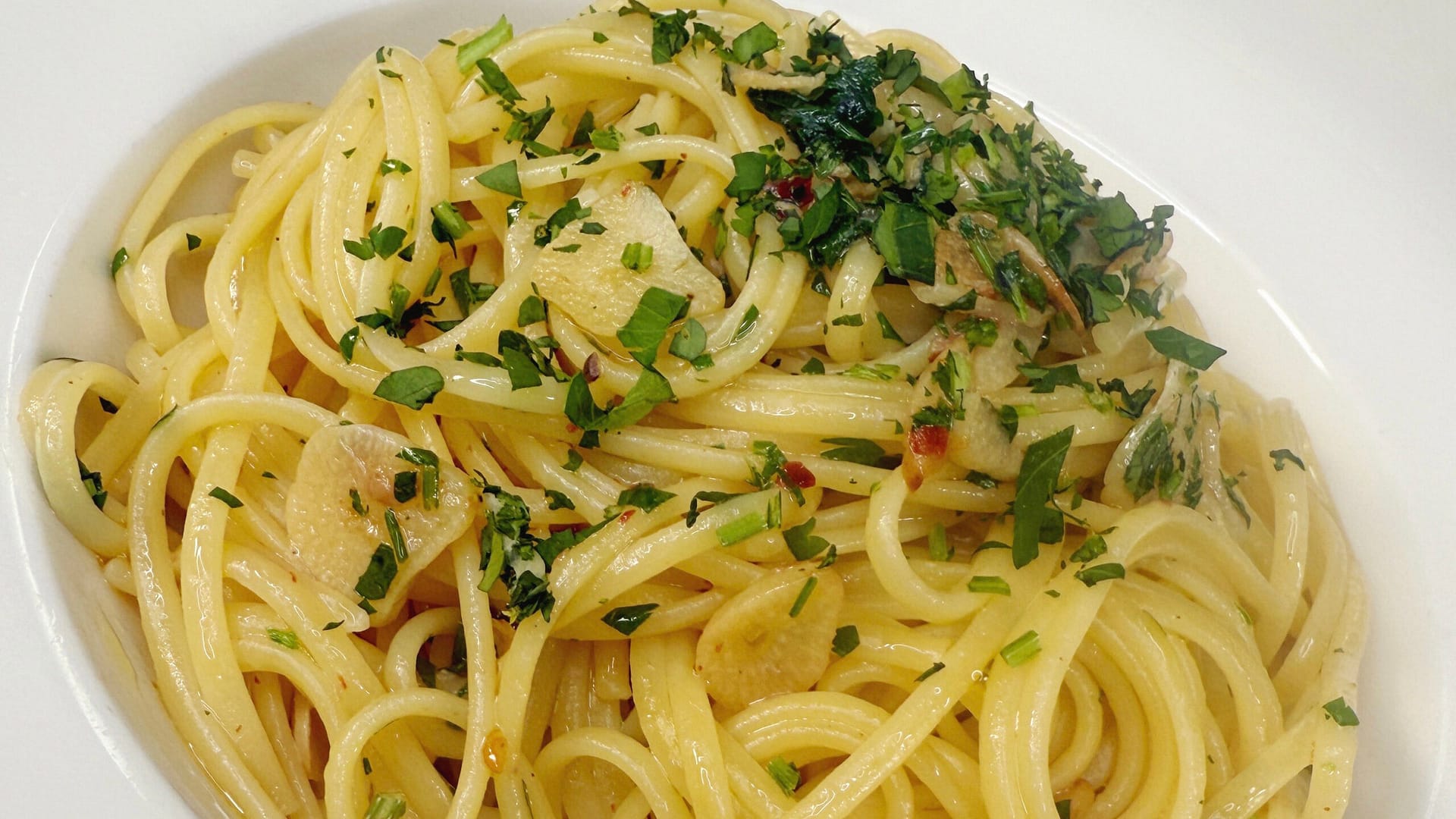
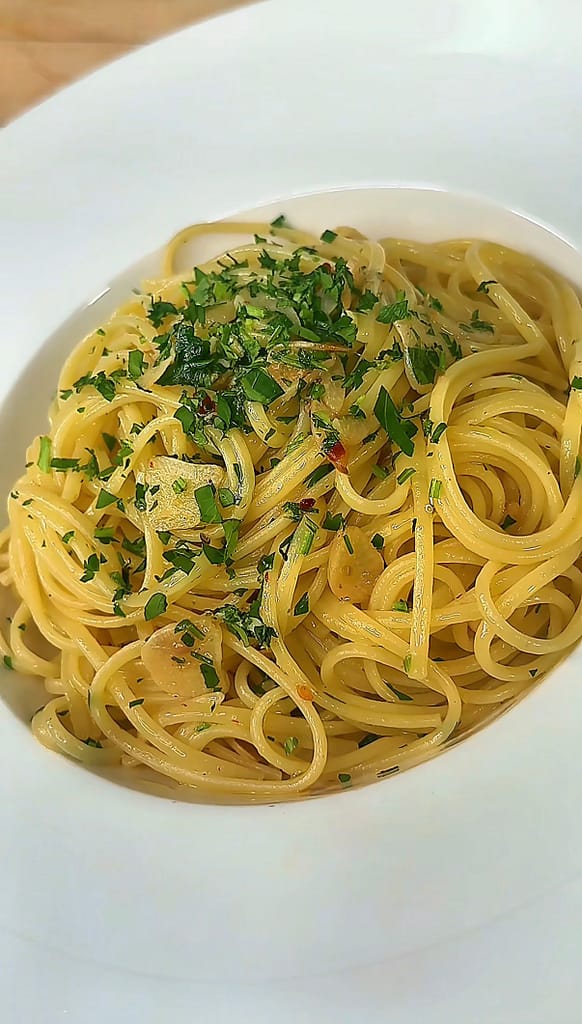
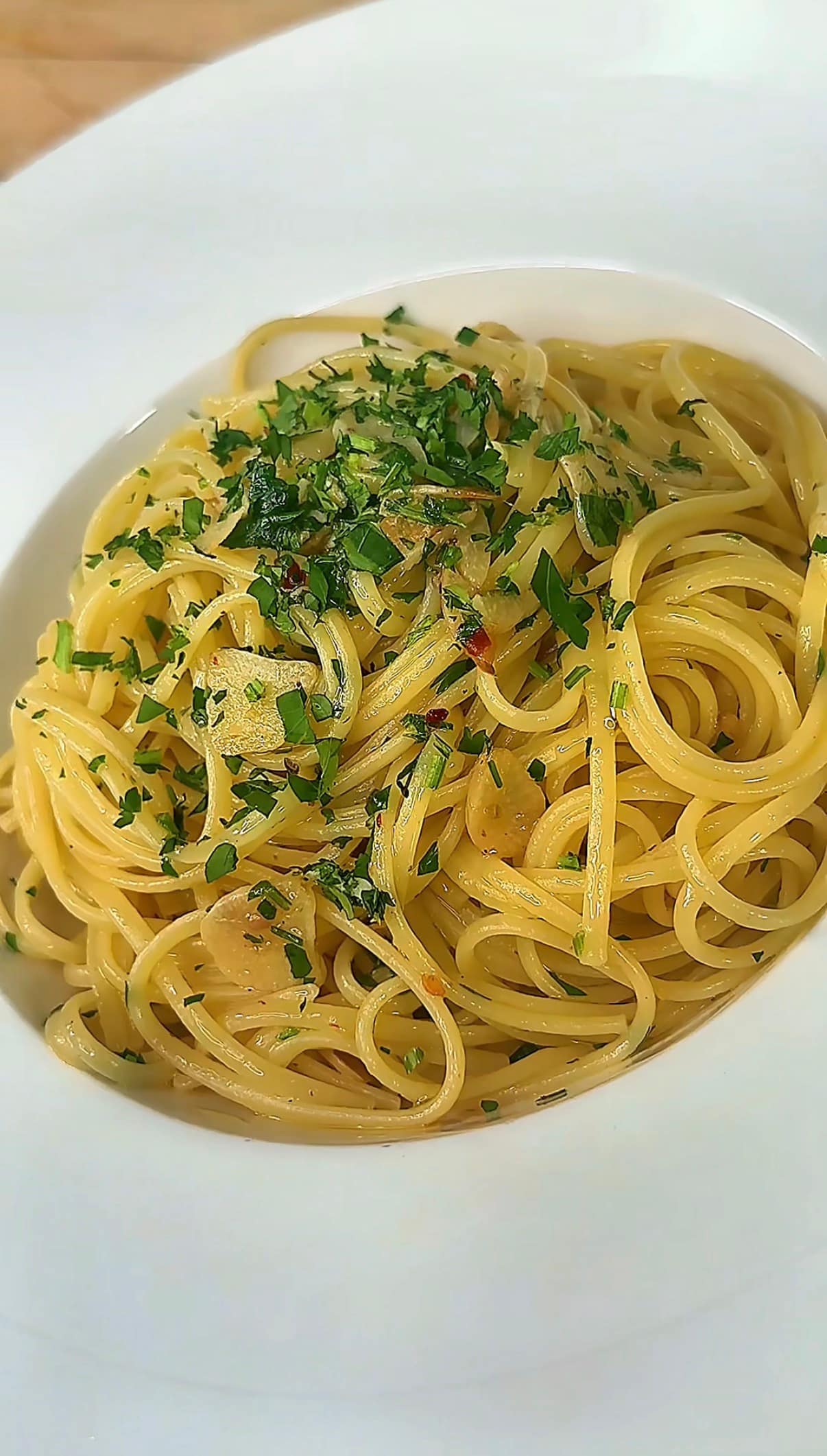
Spaghetti Aglio e Olio is one of the most iconic dishes in Italian cooking.
Made with just garlic, olive oil, pasta, and a little parsley, it proves that the best Italian recipes often rely on the simplest ingredients.
In my family we call this pasta “Sciuè Sciuè,” a Neapolitan phrase that means quick, quick. It’s the pasta you make late at night, after a long day, when you want something fast but still done right.
The key is technique: gently infusing garlic into olive oil, using starchy pasta water to create a silky sauce, and finishing everything together in the pan.
Simple ingredients. Real technique. Incredible flavor.
If you love simple pasta dishes like this, try my Pasta e Piselli or Pasta e Fagioli.
Watch How I Make It
Watch how this Spaghetti Aglio e Olio comes together step-by-step.
The Simplicity of Aglio e Olio
Aglio e Olio is a perfect example of Italian cooking philosophy — using a few ingredients and executing them properly.
It’s a dish that relies entirely on technique, where timing and balance make all the difference.
Why This Version Works
Aglio e Olio is all about control — the garlic should be lightly golden, never burnt, and the oil should carry that flavor without becoming heavy.
This version focuses on building a proper emulsion with pasta water, creating a silky sauce that coats the pasta evenly instead of sitting at the bottom of the plate.
Technique & Texture: Getting Aglio e Olio Right
The key to a great spaghetti aglio e olio is technique. The garlic must be gently infused into the oil over medium-low heat to avoid bitterness.
Adding pasta water is what transforms the dish — the starch binds with the oil to create a smooth, glossy sauce that clings to every strand of pasta.
Tossing everything together in the pan at the end ensures the pasta finishes cooking in the sauce.

Spaghetti Aglio e Olio
Ingredients
Method
- Bring a large pot of water to a boil. Salt the water generously — it should taste like broth.
- Add the pasta and cook until al dente according to package instructions. Reserve about 1 cup of pasta water before draining.
- While the pasta cooks, thinly slice the garlic and finely chop the parsley.
- In a large sauté pan over low heat, add the olive oil, sliced garlic, parsley stems, anchovy fillets (if using), and a pinch of red pepper flakes.
- Cook gently until the garlic becomes fragrant and lightly golden. Do not allow it to brown.
- Add a ladle of reserved pasta water to the pan and allow it to simmer.
- Transfer the pasta directly into the sauté pan and toss vigorously to combine.
- The olive oil and pasta water will emulsify into a glossy sauce. Add more pasta water as needed to loosen the sauce.
- Finish with freshly chopped parsley and toss again.
- Serve immediately.
Chef’s Notes
- Keep the heat low. Garlic that browns too much becomes bitter.
- Pasta water is essential. The starch helps emulsify the sauce.
- Anchovy is optional but traditional in many Southern Italian versions and adds depth of flavor.
- Aglio e Olio is best served immediately while the sauce is fresh and glossy.
Spaghetti Aglio e Olio Questions
What does aglio e olio mean?
Aglio e olio translates to “garlic and oil” in Italian, referring to the simple ingredients used to create the sauce.
Why add pasta water to aglio e olio?
Pasta water contains starch that helps emulsify the olive oil into a silky sauce that coats the pasta.
Can you make aglio e olio without anchovies?
Yes. Anchovies are optional and used in some Southern Italian variations to add depth of flavor.
What pasta is best for aglio e olio?
Spaghetti is the most traditional pasta shape, though linguine also works well.