
Veal Saltimbocca
Veal Saltimbocca: A True Roman Classic
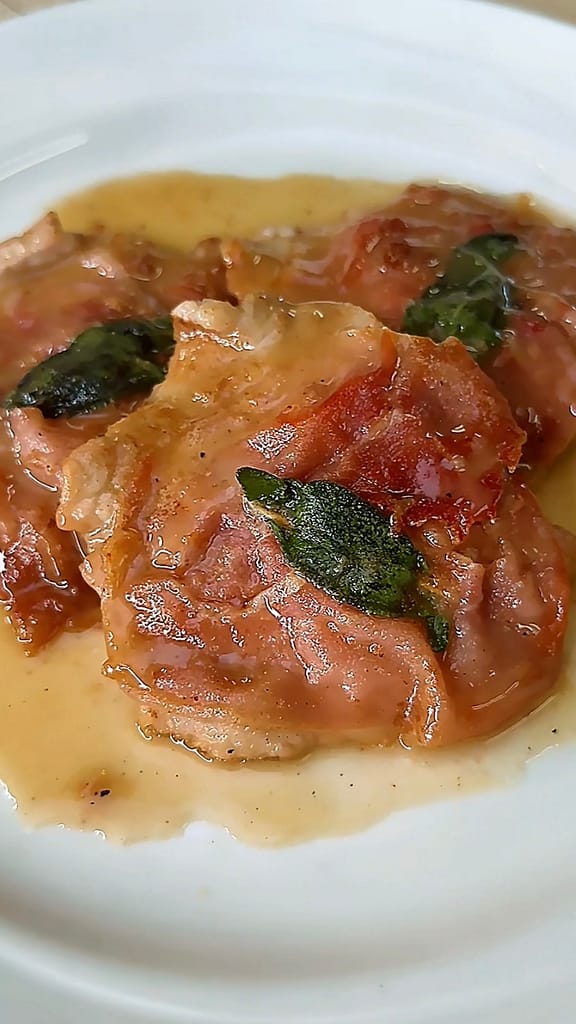
Veal Saltimbocca — or Saltimbocca alla Romana — is one of the most iconic dishes in Roman cooking.
Thin veal cutlets are layered with prosciutto and fresh sage, then quickly seared and finished in a light white wine sauce that’s rich without becoming heavy.
The name saltimbocca literally means “jumps in the mouth,” and once you taste it, it makes sense — it’s simple, elegant, and packed with flavor.
It’s a perfect example of Roman cooking philosophy: a few ingredients, executed properly.
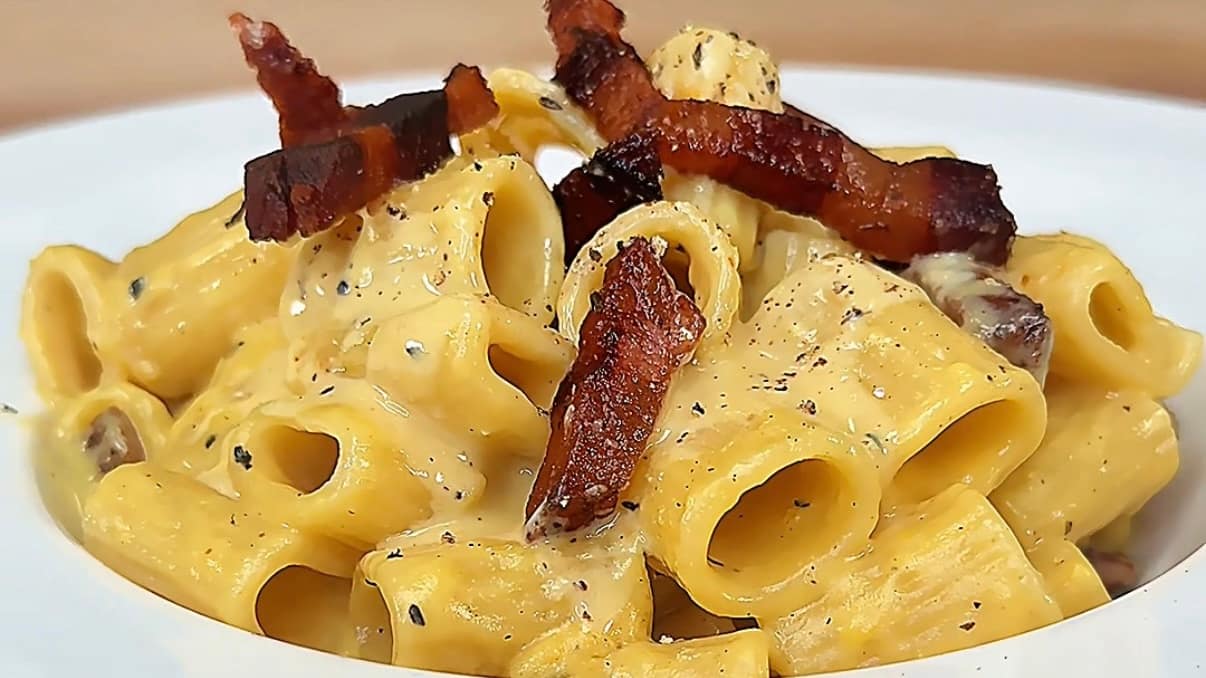
If you enjoy Roman classics like this, try my Cacio e Pepe or Carbonara, two other dishes rooted in Roman cooking traditions.
Watch How I Make It
Watch how this Veal Saltimbocca comes together step-by-step.
Why This Version Works
Saltimbocca works because every ingredient has a purpose. The veal stays delicate, the prosciutto adds salt and richness, and the sage brings an earthy flavor that cuts through the butter sauce.
This version keeps the sauce light and balanced so the veal remains the focus.
Technique & Texture: Getting Saltimbocca Right
The key to great Veal Saltimbocca is speed and control. The veal should cook quickly so it stays tender, while the prosciutto crisps slightly without becoming dry.
Building the sauce directly in the same pan captures all the flavor left behind from the veal and prosciutto.
Finishing with butter off the heat creates the smooth texture that defines the dish.
The Tradition Behind Saltimbocca alla Romana
Saltimbocca alla Romana comes from Rome and has long been one of the city’s signature dishes.
Like many Roman recipes, it relies on strong flavors and minimal ingredients. Veal, cured pork, sage, and wine come together in a way that feels elegant but still rooted in simplicity.
Its balance of richness and freshness helped make it one of the most recognizable dishes in Roman cuisine.
Why Veal Works So Well in Saltimbocca
Veal is traditionally used in Saltimbocca because of its delicate texture and mild flavor.
Unlike heavier cuts of meat, veal cooks quickly and absorbs the flavors of the prosciutto, sage, and wine without overpowering them. This balance is what makes the dish feel elegant while still remaining simple and approachable.
When cooked properly, the veal stays tender and allows the sauce and aromatics to stand out naturally.
The simplicity of Saltimbocca is what makes it timeless. Nothing competes for attention — every ingredient has a purpose, and the balance between the veal, sage, prosciutto, and sauce is what makes the dish work so well.
Serving Veal Saltimbocca
Veal Saltimbocca is traditionally served with simple sides that don’t overpower the dish. Sautéed spinach, roasted potatoes, or lightly dressed vegetables all work well because they complement the sauce without competing with it.
The goal is to keep the focus on the balance between the veal, sage, prosciutto, and wine sauce.
The Simplicity of Roman Cooking
Roman cuisine is known for taking a few ingredients and building bold flavor through technique rather than complexity.
Saltimbocca is a perfect example — every ingredient stands out while still working together in balance.
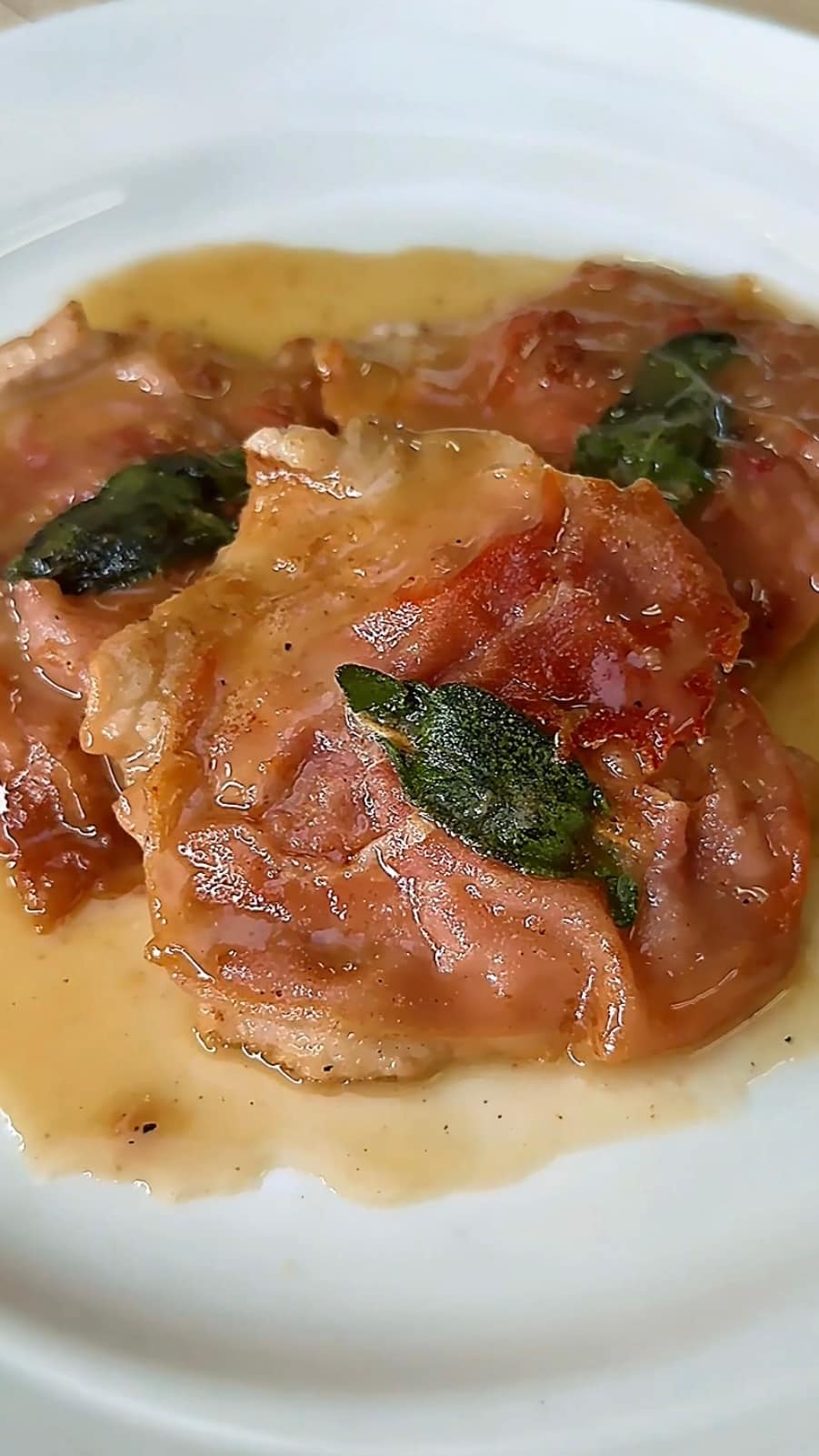

Veal Saltimbocca
Ingredients
Method
- Layer each piece of veal with a slice of prosciutto and a fresh sage leaf. Secure with a toothpick.
- Lightly dredge both sides in flour and shake off any excess.
- Heat olive oil and 2 tablespoons butter in a wide pan over medium-high heat.
- Place the veal prosciutto-side down first and season lightly with salt and pepper.
- Cook for 1–2 minutes, until the prosciutto is golden and slightly crisp.
- Flip and cook the other side for another 1–2 minutes.
- Add the white wine and scrape up any browned bits from the pan. Let it reduce by about half.
- Turn off the heat and swirl in the remaining butter until the sauce becomes glossy and emulsified.
- Spoon the sauce over the veal and serve immediately.
Chef’s Notes
- Always cook prosciutto-side down first so it crisps properly.
- Do not overcook the veal — it should remain tender.
- Turning off the heat before adding butter ensures a smooth, emulsified sauce.
- Use a dry white wine like Pinot Grigio for best results.
Veal Saltimbocca Questions
What does saltimbocca mean?
Saltimbocca means “jumps in the mouth” in Italian, referring to the bold flavor of the dish.
What is traditional saltimbocca made with?
Traditional Saltimbocca alla Romana is made with veal, prosciutto, sage, white wine, and butter.
Can you make saltimbocca with chicken?
Yes. Chicken can be used as a substitute, though veal is traditional.
What should you serve with veal saltimbocca?
It pairs well with sautéed spinach or roasted potatoes.